
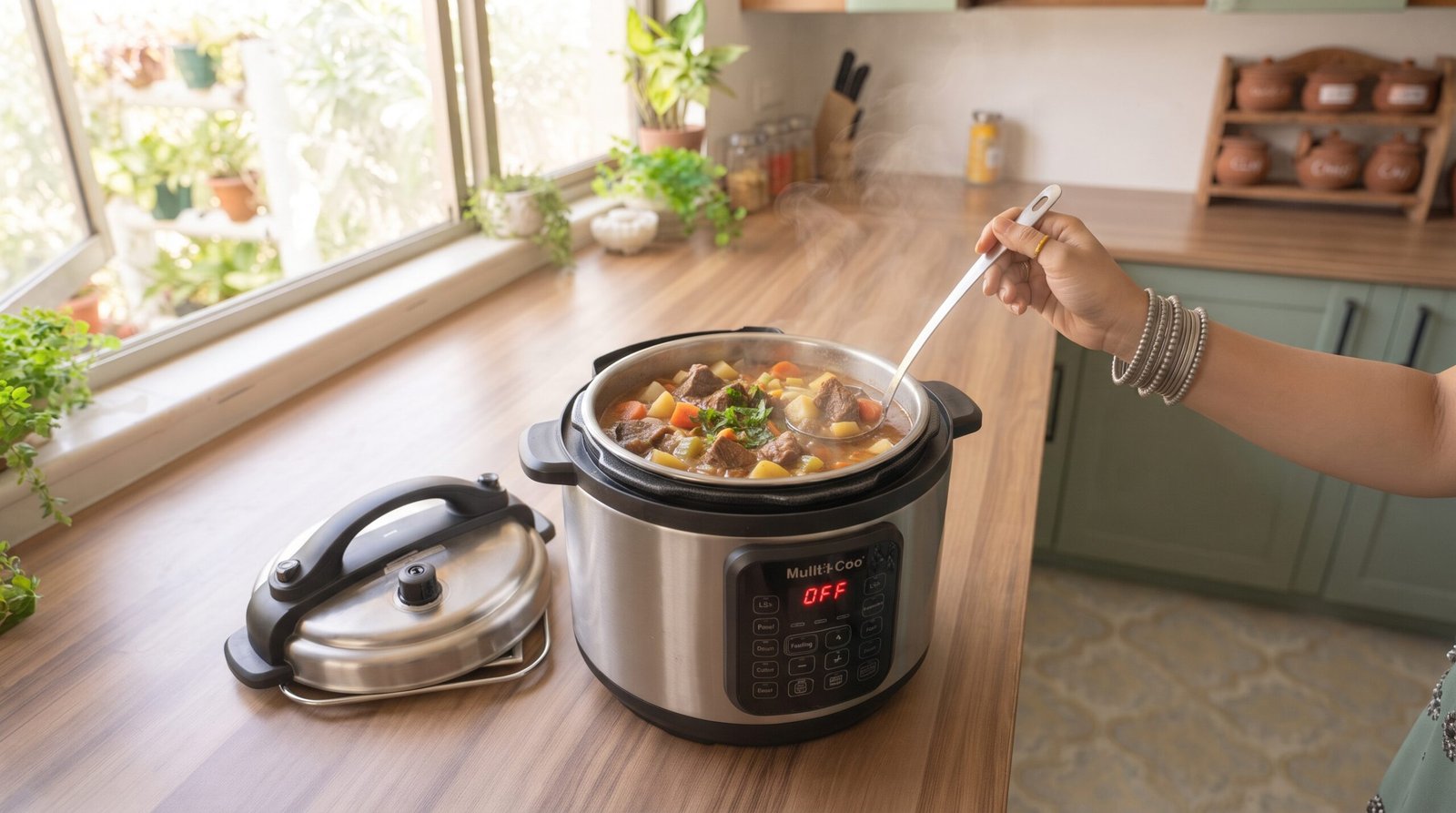
Transitioning tough cuts of meat, dried beans, and dense root vegetables into tender, flavorful dishes no longer requires hours of unattended simmering. Utilizing an instant pot pressure cooking guide helps you master high-pressure thermal mechanics, ensuring fast, energy-efficient meals without sacrificing taste or moisture.
Understanding how sealed steam pressure raises the boiling point of water transforms how you approach weekly meal prep.
Key Takeaways
- The Liquid Rule: Always include at least one cup of thin liquid (like water, broth, or tomato sauce) to generate the steam necessary to build pressure.
- Natural vs. Quick Release: Use natural pressure release for meats and starches to prevent toughening, and quick release for delicate vegetables.
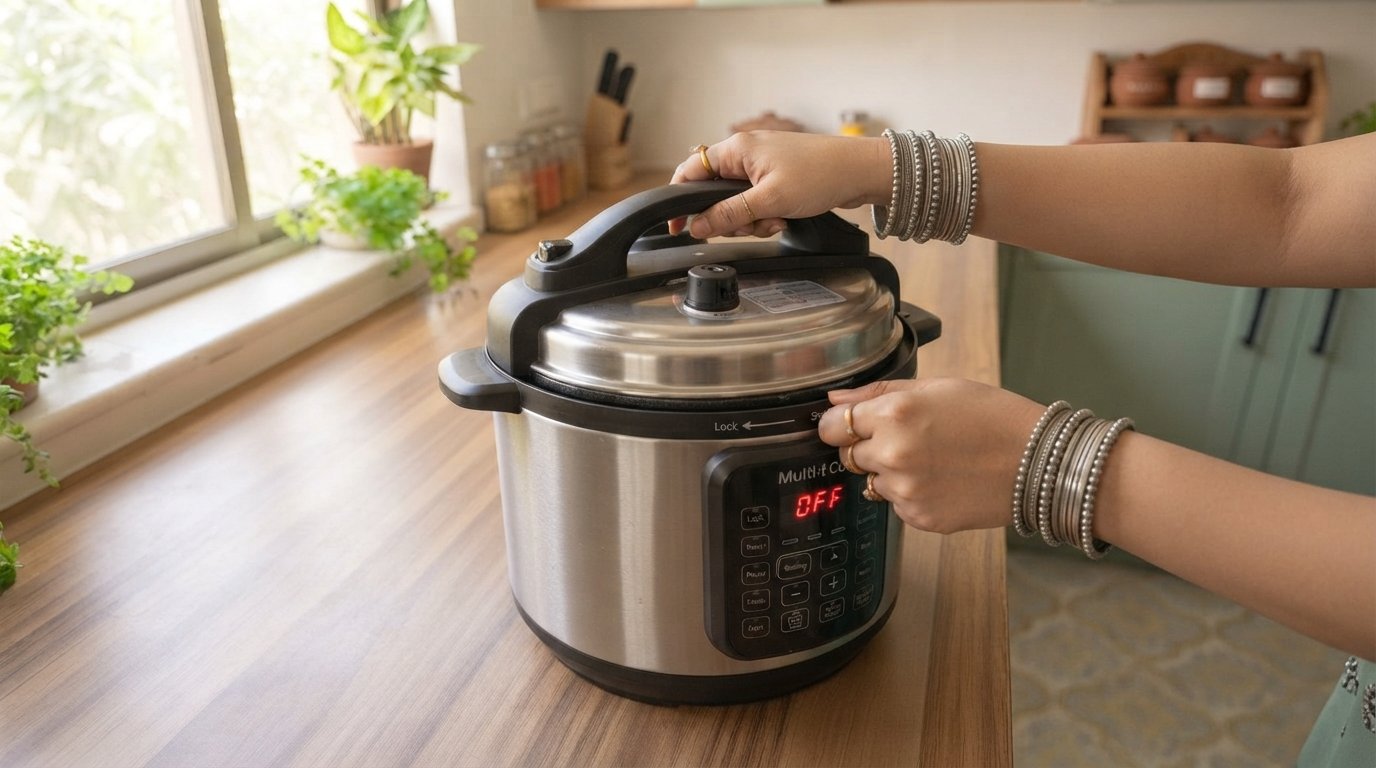
- Sealing Position: Ensure the steam release valve is securely turned to the “Sealing” position before starting any pressure cycle.
- Avoid Overfilling: Never fill the inner pot past the halfway mark when cooking foods that expand, such as beans, grains, or dried legumes.
Understanding Pressure Cooking Mechanics
Mastering your multi-cooker requires knowing how trapped steam builds internal temperature and cooks food uniformly.
How Sealed Pressure Works
When the appliance is locked and heated, water turns to steam that cannot escape. This trapped vapor increases internal atmospheric pressure, pushing heat deep into food fibers up to 70% faster than conventional stovetop boiling or oven baking.
The Importance of the Sealing Ring
The silicone ring inside the lid creates an airtight seal. Regularly inspect, clean, and replace this ring to prevent steam leaks that prevent the appliance from coming to pressure.
Venting Methods: Natural Release vs. Quick Release
Releasing pressure correctly is critical for achieving optimal food textures and avoiding kitchen messes.
Natural Pressure Release (NPR)
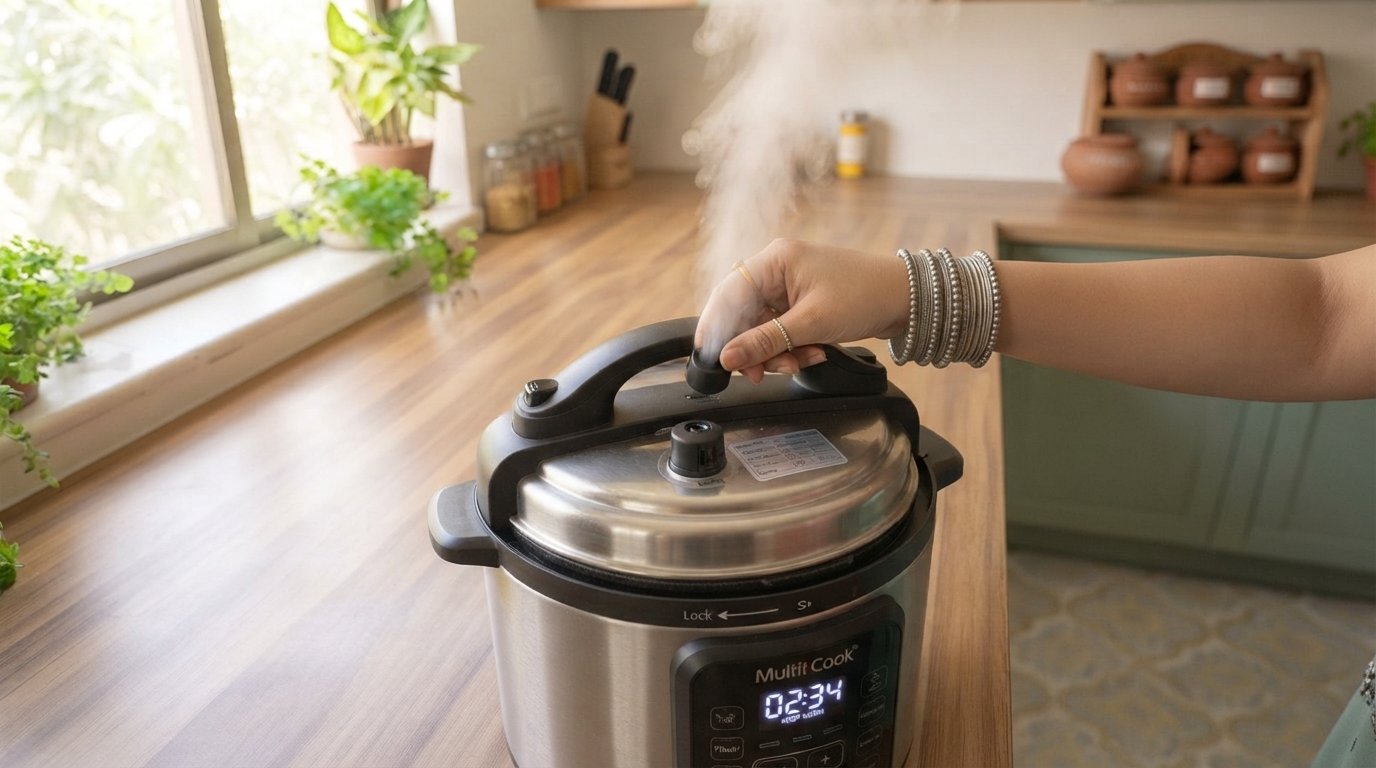
Allowing the cooker to depressurize naturally on its own takes 10 to 25 minutes. This gentle cooling prevents meats like pot roast or ribs from seizing up and drying out, keeping them exceptionally tender.
Quick Pressure Release (QPR)
Flipping the steam valve to “Venting” immediately releases a forceful plume of steam. Use this method for quick-cooking vegetables, eggs, or pasta to prevent overcooking.
Pro Strategies for Troubleshooting and Success
Applying these expert workflows ensures consistent cooking results across a wide variety of ingredients.
- Perform the Water Test First: Run an initial test cycle with just two cups of water to ensure your sealing ring, valve, and heating element operate correctly.
- Deglaze the Inner Pot: Scrape away browned bits on the bottom of the stainless steel pot after sautéing meats to prevent the dreaded “Burn” error message.
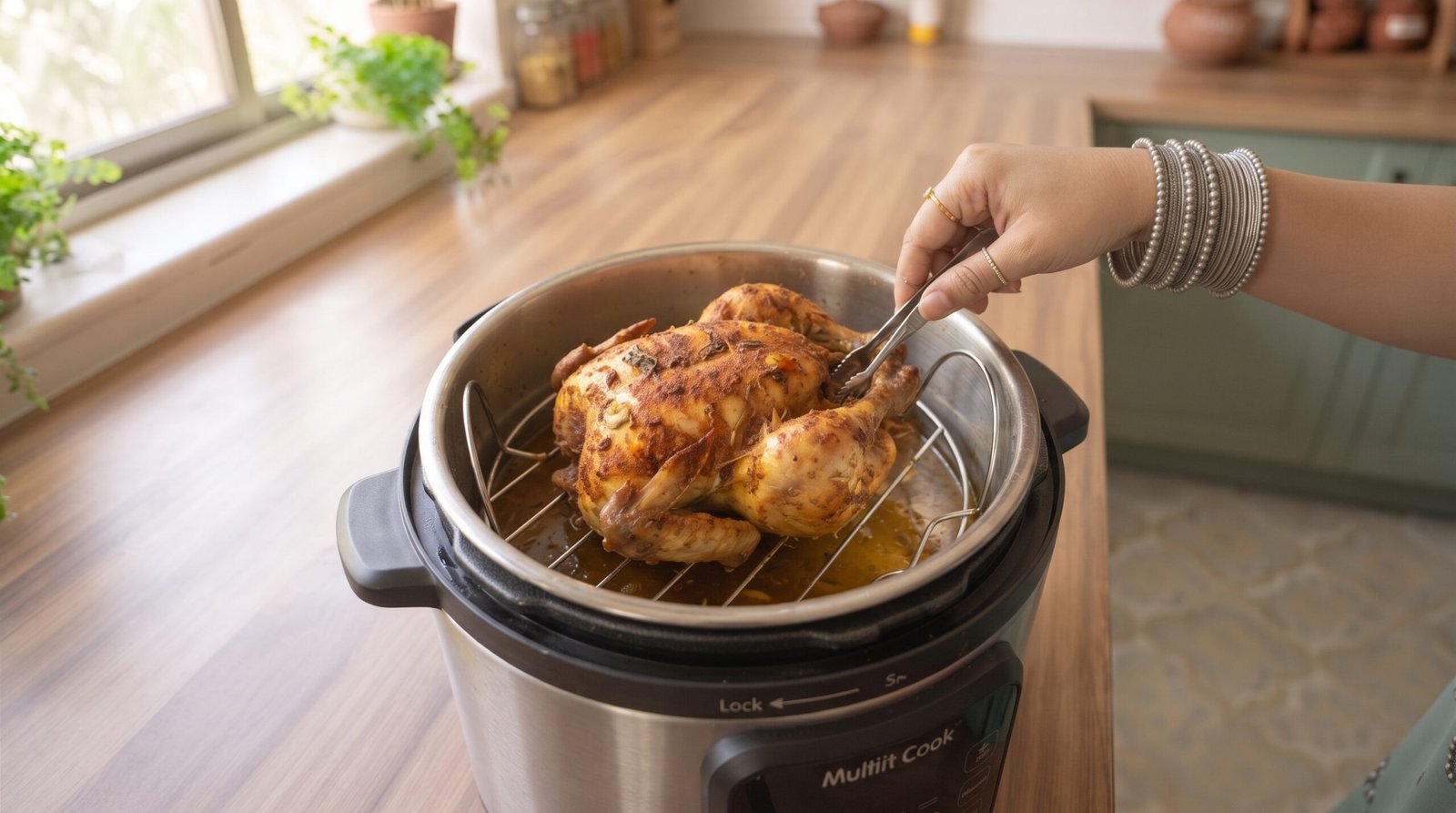
- Use the Trivet Insert: Elevate delicate foods like whole chickens or vegetables above the cooking liquid using the wire trivet rack to prevent boiling or sogginess.
Conclusion
Following this instant pot pressure cooking guide eliminates guesswork and ensures safe, efficient meal preparation. By mastering liquid ratios, understanding pressure release methods, and maintaining your appliance components, you can enjoy perfectly cooked, tender meals in a fraction of traditional cooking times.
Frequently Asked Questions
What causes the “Burn” error message on an electric pressure cooker?
The “Burn” message appears when thick sauces or food particles stick to the bottom of the hot stainless steel inner pot and scorch due to insufficient liquid or lack of stirring.
Can you pressure cook frozen meat without thawing?
Yes. You can cook frozen meat directly, but you must extend the cooking time by roughly 50% and ensure the meat is small enough to fit comfortably in the pot with adequate cooking liquid.
Do you need to adjust liquid amounts when scaling up recipes?
No. Pressure cookers require a sealed environment with steam, meaning liquid does not evaporate the same way it does in open stovetop pots. You only need enough liquid to cover the minimum threshold (usually one cup).
1 thought on “Pressure-Cooking: Complete Instant Pot Pressure Cooking Guide for Beginners”