
How to remove rust from carbon steel wok
Carbon steel woks are the undisputed workhorses of high-heat Asian cooking, celebrated for their rapid heat responsiveness and ability to build an authentic wok hei (breath of the wok). However, because carbon steel lacks the protective chromium layer found in stainless steel, moisture exposure leads to rapid oxidation. Finding an old, neglected pan covered in orange spots can be discouraging, but learning how to remove rust from carbon steel wok surfaces is surprisingly straightforward and will bring your cookware back to life.
Unlike non-stick pans with damaged coatings, rusty carbon steel is almost never ruined beyond repair. With basic household supplies like vinegar, steel wool, and high-smoke-point oil, you can strip away the rust and build a rock-solid natural patina that lasts for generations.
Key Takeaways
- Rust is Surface-Level: Oxidation on carbon steel cookware is rarely structural; scrubbing down to raw metal restores the pan completely.
- Acids Neutralize Rust: Diluted white vinegar breaks down iron oxide within 20 to 30 minutes.
- Abrasives Are Mandatory: Steel wool grade #0000 or fine chainmail scrubs away stubborn rust flakes without gouging the metal.
- Immediate Re-seasoning is Crucial: Exposed raw carbon steel rusts within minutes (flash rust) if not dried thoroughly over heat and sealed with oil immediately.
Why Carbon Steel Woks Rust (and Why It’s Fixable)
Carbon steel is composed primarily of iron and a tiny percentage of carbon. When iron encounters moisture and oxygen, a chemical reaction forms iron oxide—commonly known as rust.
Learn how to remove rust from carbon steel wok pans easily. Restore old, rusty cookware with simple household items and re-season for a non-stick finish
This happens most frequently when:
- The wok is left soaking in the sink overnight.
- The protective seasoning layer wears down and isn’t reapplied.
- The wok is stored in a humid environment without a protective oil coating.
The good news? Rust on carbon steel is almost always superficial. Beneath that reddish layer lies durable metal ready to be restored.
Essential Supplies You’ll Need
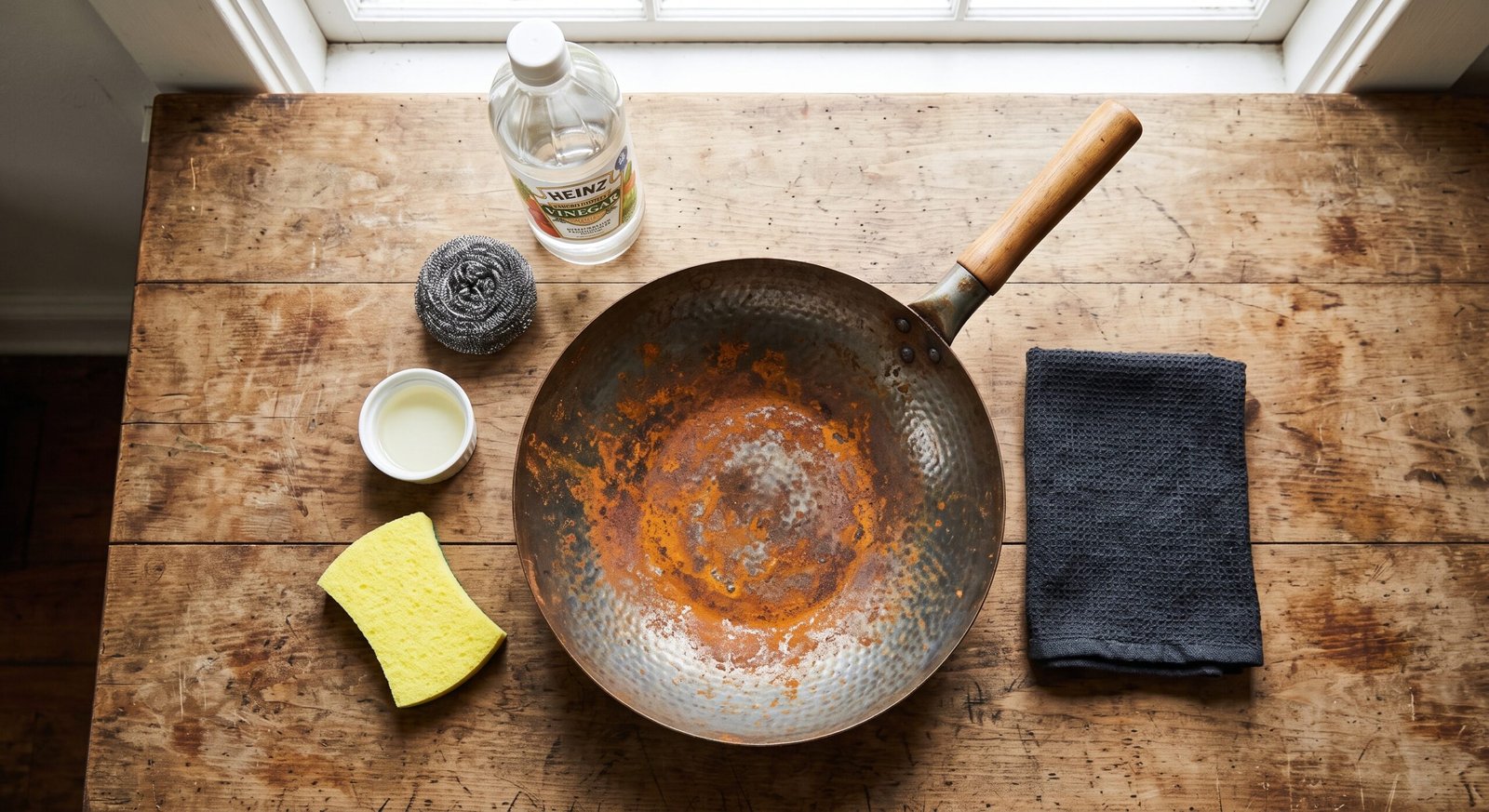
Before starting the restoration process, gather these simple tools:
- Distilled White Vinegar: Breaks down iron oxide.
- Warm Water & Dish Soap: For cleaning residue.
- Steel Wool (Grade 00 or 0000) or Stainless Steel Scrubber: For manual scrubbing.
- Lint-Free Microfiber Towels or Paper Towels: For thorough drying.
- High-Smoke-Point Oil: Grapeseed, canola, peanut, or avocado oil.
- Heat Source: Gas stove burner, electric range, or outdoor burner..
Step-by-Step Restoration Guide
Step 1: The Vinegar Soak (For Heavy Rust)
If your wok has extensive, deep rust, submerge it in a solution of 50% warm water and 50% white vinegar for 20 to 30 minutes.
Important Caution: Do not soak carbon steel in vinegar for more than 30 to 45 minutes. The acid eats through rust first, but prolonged exposure will begin pitting the underlying metal.
If the wok only has light surface spots, skip the soak and apply vinegar directly onto a sponge.
Step 2: Scrub Down to Bare Metal
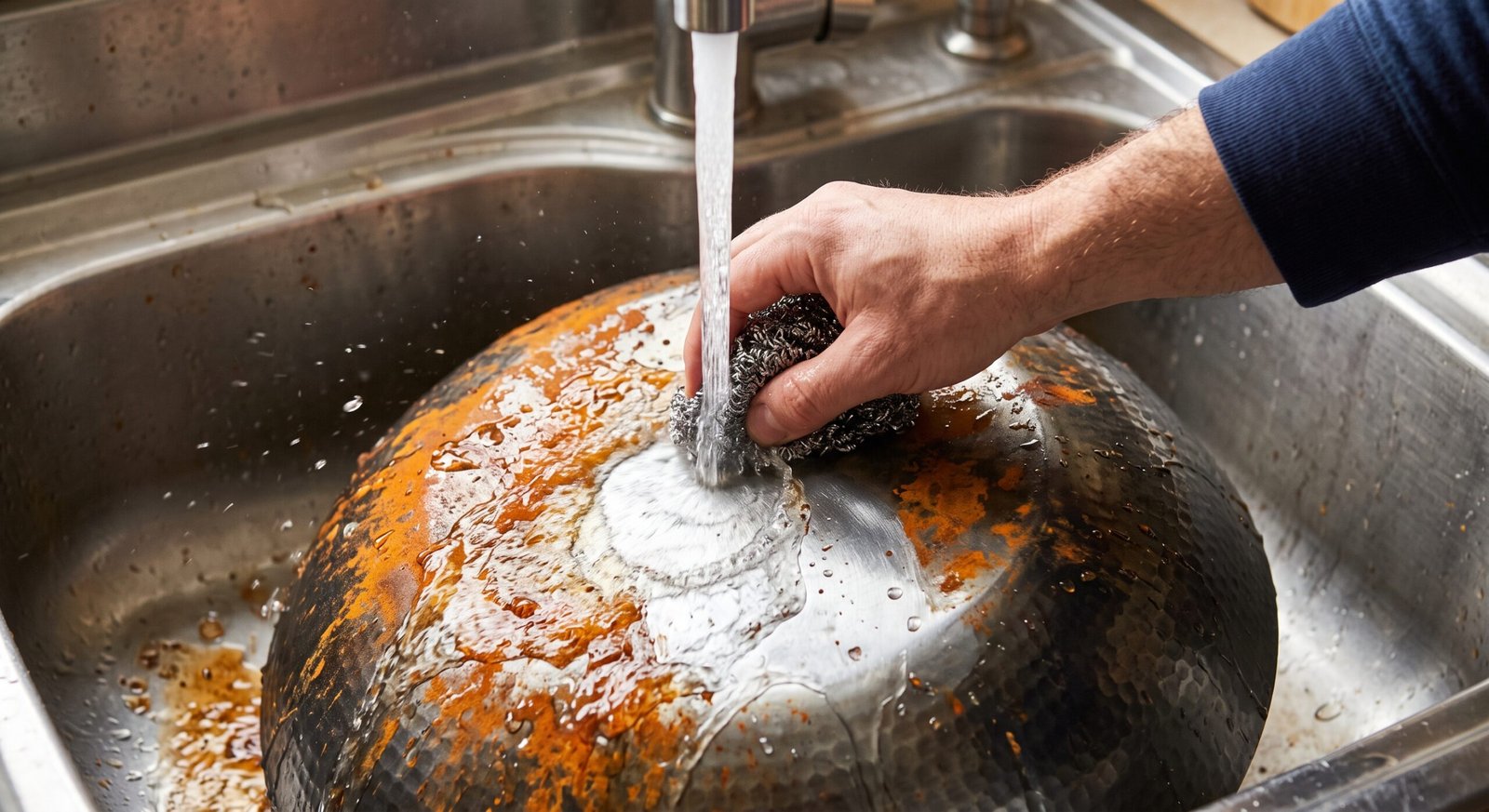
Scrub the wok vigorously using warm soapy water and steel wool. Work in small circular motions over the interior and exterior surfaces. As the rust lifts, rinse the pan under running water. Continue scrubbing until you see the bare, grayish-silver carbon steel beneath the old seasoning and rust.
Step 3: Prevent Flash Rust (Immediate Heat Drying)
Raw carbon steel oxidizes rapidly when exposed to air and water. As soon as you finish scrubbing:
- Rinse the wok with cold water.
- Dry it thoroughly with a clean towel.
- Place it on a stove burner over medium-high heat for 2 to 3 minutes to evaporate every drop of trapped moisture.
How to Re-Season Your Restored Carbon Steel Wok
Once rust is removed, you must seal the raw metal immediately to prevent rust from returning and to recreate a smooth, non-stick cooking surface.
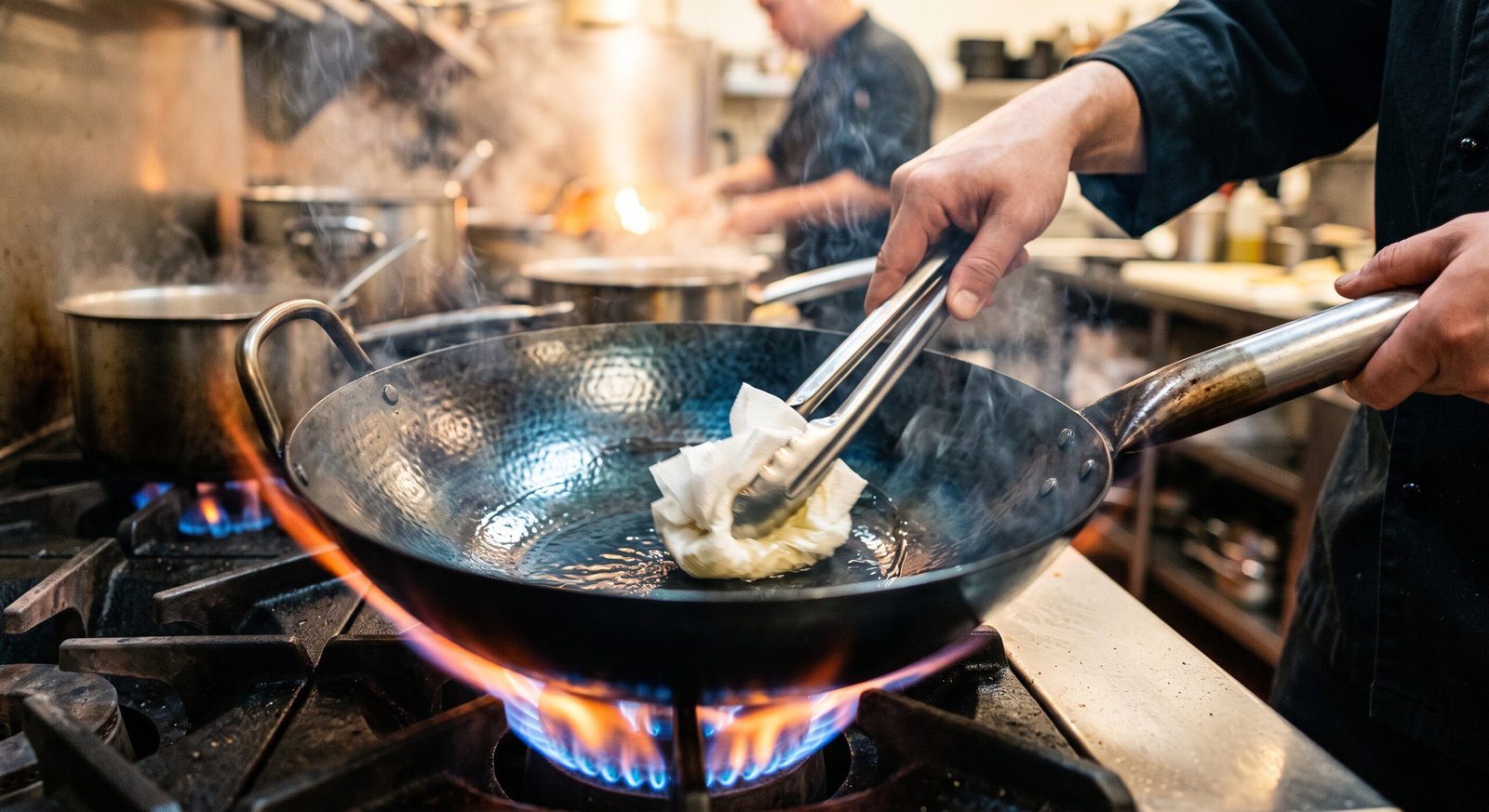
- Preheat the Wok: Place the dry wok over high heat. The raw metal will turn from silver to a dark blue/amber hue as it heats—this process (blueing) forms a protective oxide layer.
- Apply Thin Oil: Reduce heat to medium-low. Add 1 teaspoon of high-smoke-point oil. Using tongs holding a wad of paper towels, wipe the oil evenly across the entire interior and exterior surfaces.
- Smoke It Out: Turn heat back to medium-high. Allow the oil to smoke off until the shine fades and the surface turns a matte dark amber or black.
- Repeat: Apply 2 to 3 thin layers of oil, heating between each application, until the wok develops a slick, bronze-to-black coating.
How to Prevent Future Rust
To keep your carbon steel wok rust-free and non-stick for life, follow these daily maintenance habits:
- Never Use the Dishwasher: High humidity and harsh detergents strip seasoning and cause severe rusting.
- Clean While Warm: Wash with hot water and a soft sponge or bamboo wok brush right after cooking. Avoid heavy soaps once a strong seasoning patina is established.
- Always Heat-Dry: Never let a wok air-dry on a rack. Warm it on the stove for 60 seconds after washing to eliminate residual dampness.
- Lightly Oil Before Storing: Wipe a microscopic layer of oil over the interior surface before placing it in your cabinet.
Frequently Asked Questions
Is rust on a carbon steel wok dangerous or toxic?
Small amounts of surface rust (iron oxide) are non-toxic and not harmful in tiny quantities, but cooking on a rusty pan ruins food flavor, causes heavy sticking, and degrades your cookware. It should always be scrubbed away before cooking.
Why did my wok turn orange again right after I dried it?
This is called “flash rust.” It happens when completely bare, unseasoned iron reacts rapidly with humidity in the air immediately after washing. To prevent it, dry the wok over stove heat immediately and rub oil onto it while it is still warm.
Can I use Bar Keepers Friend to remove rust from carbon steel?
Yes! Bar Keepers Friend contains oxalic acid, which effectively dissolves rust without damaging carbon steel. Apply the powder with a little water, scrub with a scouring pad, rinse thoroughly, and immediately heat and oil the pan.
Pingback: essential kitchen tools under $153