
Cooking salmon, trout, or tilapia in cast iron creates an unmatched crispy sear. However, many home cooks hesitate to sear seafood because they fear lingering fishy odors or stubborn oil residue will ruin their pan. Knowing how to clean cast iron skillet after cooking fish ensures you get all the benefits of high-heat seafood cooking while keeping your cookware completely odor-free and perfectly seasoned.
With the right cleaning techniques, you can eliminate fish oil smells, preserve your pan’s non-stick patina, and prevent future rust in just a few minutes.
Key Takeaways
- Clean While Warm: Scrubbing the skillet while it is still warm prevents fish oils from hardening and setting into the seasoning layer.
- Neutralize Odors with Salt & Lemon: Coarse kosher salt absorbs fish oils, while lemon juice or baking soda neutralizes strong organic odor compounds.
- Avoid Soaking: Never soak cast iron in water or leave it to air dry, as standing water damages seasoning and causes rapid rusting.
- Always Stove-Dry & Re-Oil: Heating the pan after cleaning evaporates hidden moisture, and a micro-coat of oil seals the porous iron surface.
Why Cooking Fish Requires Special Cleaning Attention
Fish contains delicate proteins and rich omega-3 fatty acids that release volatile aromatic compounds when exposed to high heat. Unlike beef or chicken, fish oils penetrate micro-cracks in unseasoned or lightly seasoned cast iron surfaces, leading to a persistent smell if left uncleaned.
Furthermore, fish skin can easily stick to iron if the pan was not thoroughly preheated, leaving behind baked-on residue. Addressing both the physical residue and the microscopic oil particles is key to mastering how to clean cast iron skillet after cooking fish.
Essential Supplies You Will Need
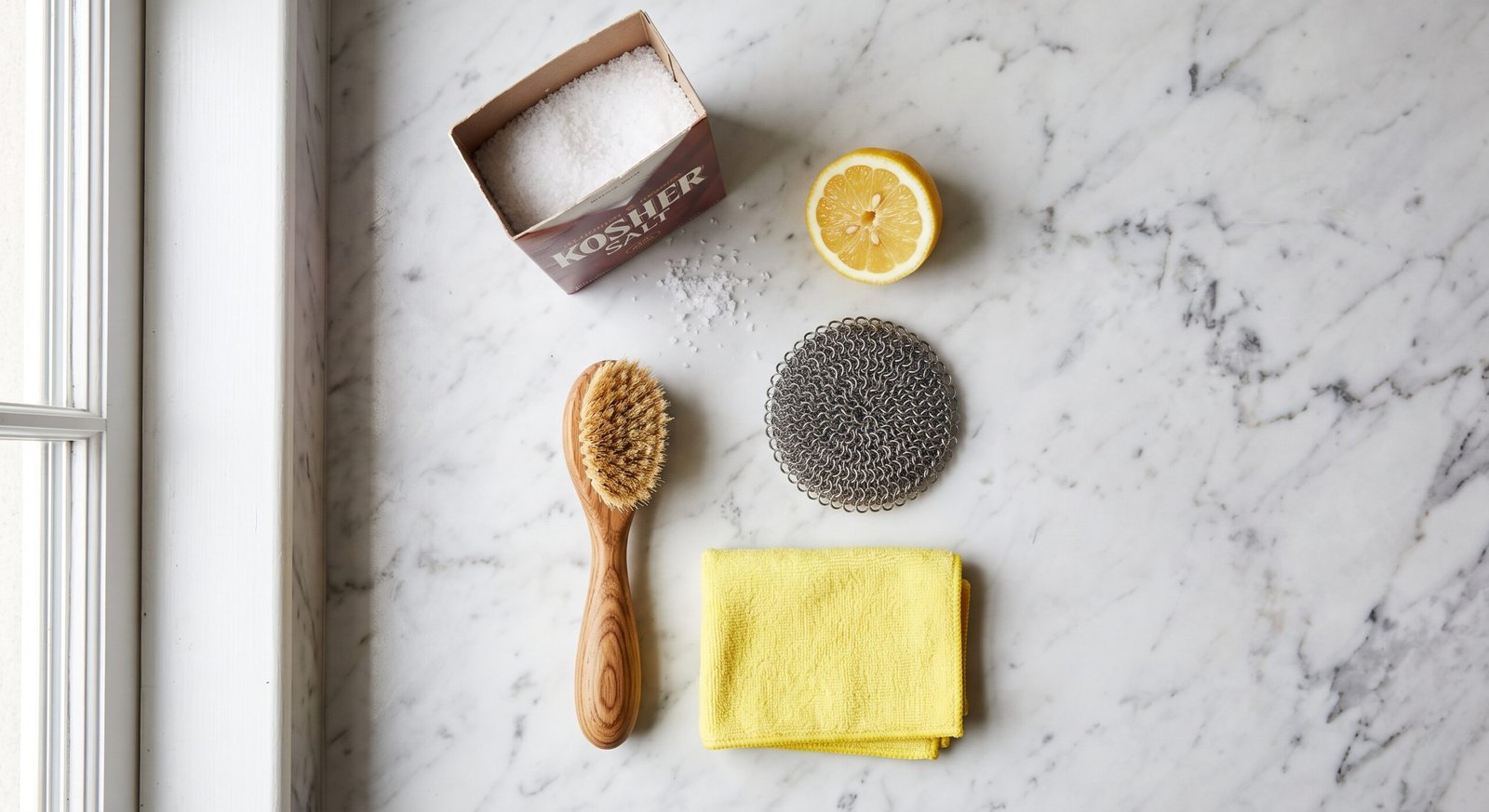
Before you start cleaning, gather these simple, cast-iron-safe supplies:
- Warm Water: Helps melt and lift remaining fish fats.
- Coarse Salt or Baking Soda: Acts as a gentle abrasive and odor absorber.
- Stiff Nylon Brush or Chainmail Scrubber: Removes stuck skin without stripping seasoning.
- Fresh Lemon (Optional): Natural citric acid neutralizes fish odor.
- Paper Towels or Lint-Free Cloth: For drying and oiling.
- High-Smoke-Point Oil: Canola, grapeseed, or vegetable oil for resealing.
Step-by-Step Guide: How to Clean Cast Iron Skillet After Cooking Fish
Follow this simple 4-step routine immediately after serving your meal to ensure your cookware remains fresh and non-stick.
Step 1: Wipe Away Excess Grease While Warm
Allow the skillet to cool down slightly until it is safe to handle, but still warm. Use a paper towel to wipe out leftover cooking oil, loose fish flakes, and residual grease. Removing liquid fat early prevents odors from setting as the pan cools completely.
Step 2: Use the Salt Scrub Method for Odor and Residue
If the pan smells fishy or has burnt bits on the surface:
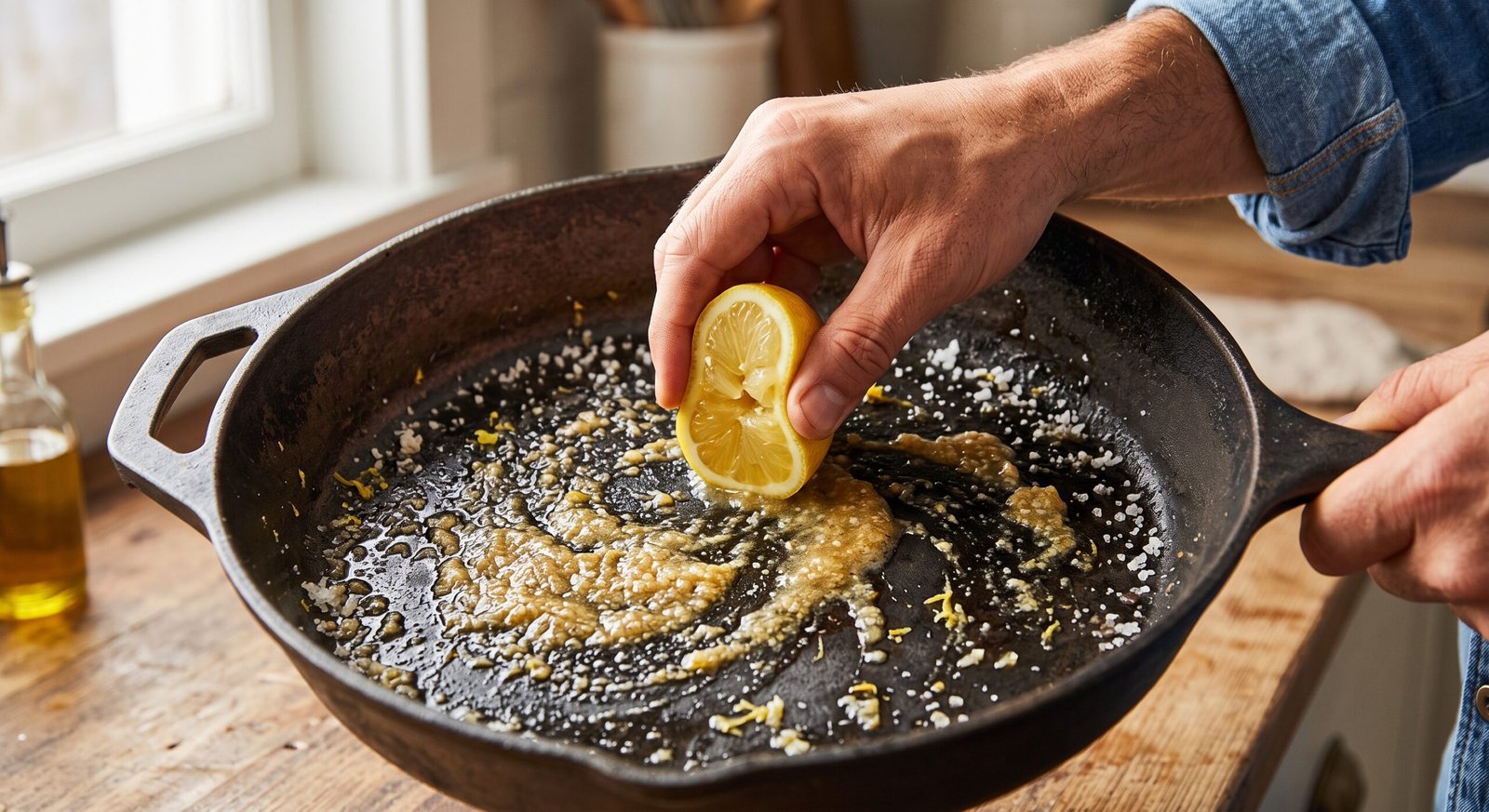
- Pour 2 to 3 tablespoons of coarse kosher salt or baking soda into the warm pan.
- Cut a lemon in half and use the flat side as a sponge to rub the salt across the pan’s surface.
- The abrasive salt lifts stuck-on fish skin while the citric acid neutralizes smell-causing amines.
- Scrub vigorously for 1 to 2 minutes, then rinse with warm water.
Pro Tip: Mild dish soap is completely safe for well-seasoned cast iron! If salt alone does not eliminate the smell, use a few drops of gentle soap with a stiff nylon brush.
Step 3: Remove Stubborn Stuck-On Bits
For heavily burnt-on fish skin, use a chainmail scrubber or stiff nylon brush under warm running water. Avoid using harsh steel wool pads, as they will strip away your hard-earned seasoning layer down to raw iron.
For more deep-cleaning and restoration methods on heavily oxidized or neglected pans, check out our guide on [Internal Link: Insert relevant internal URL here with anchor text – e.g., how to remove rust from carbon steel and cast iron cookware].
Step 4: Dry Thoroughly Over Stove Heat
Never let cast iron air-dry. Water trapped in the porous iron causes immediate flash rust.
- Towel-dry the skillet thoroughly with a clean cloth.
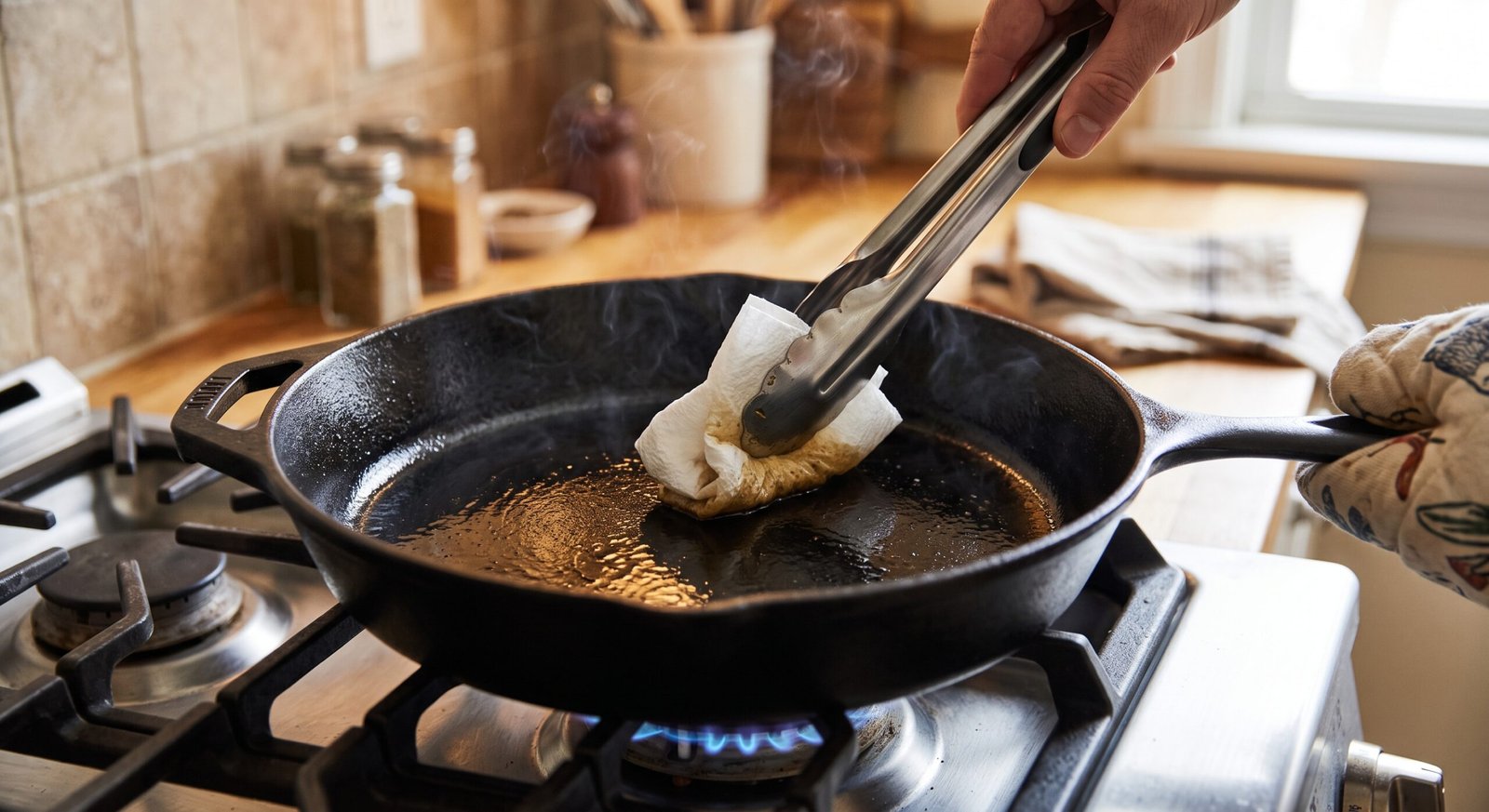
- Place the skillet on a stove burner over low-to-medium heat for 2 to 3 minutes until all trace surface moisture evaporates.
- While warm, apply 1/2 teaspoon of high-smoke-point oil using a paper towel, buffing it in until the pan looks dark and matte—not greasy.
What to Avoid When Cleaning Seafood from Cast Iron
- Do Not Soak in Water: Submerging cast iron in a sink full of water causes rust within minutes and weakens seasoning.
- Avoid Thermal Shock: Never pour cold water directly into a scorching hot pan. The drastic temperature difference can crack or warp cast iron.
- Do Not Put in the Dishwasher: Dishwasher detergent and steam destroy seasoning completely and cause extreme rusting.
Learn more about safe food preparation and cooking temperatures from [External Link: Insert high-authority external URL here with anchor text – e.g., USDA Food Safety and Inspection Service Guidelines].
Frequently Asked Questions
Will fish smell stay in my cast iron skillet permanently?
No, fish odors will not stay permanently if cleaned correctly. Using a coarse salt scrub combined with lemon juice or baking soda breaks down fish oils and eliminates odor completely without harming your skillet’s seasoning.
Can I use dish soap to clean cast iron after cooking salmon?
Yes, modern mild dish soap is safe to use on seasoned cast iron cookware. Traditional warnings against soap stem from old-fashioned lye-based soaps, which stripped seasoning. Today’s liquid dish soaps will safely remove fish oil without damaging your pan.
What should I do if my cast iron still smells like fish after cleaning?
If a fishy smell lingers, heat the clean, dry skillet on the stove for 5 minutes to burn off trace organic compounds. Alternatively, bake a thin layer of fresh oil in the oven at 450°F (232°C) for one hour to re-season the surface and seal away any remaining scent.
Pingback: How to get burnt food stains off stainless steel pan