
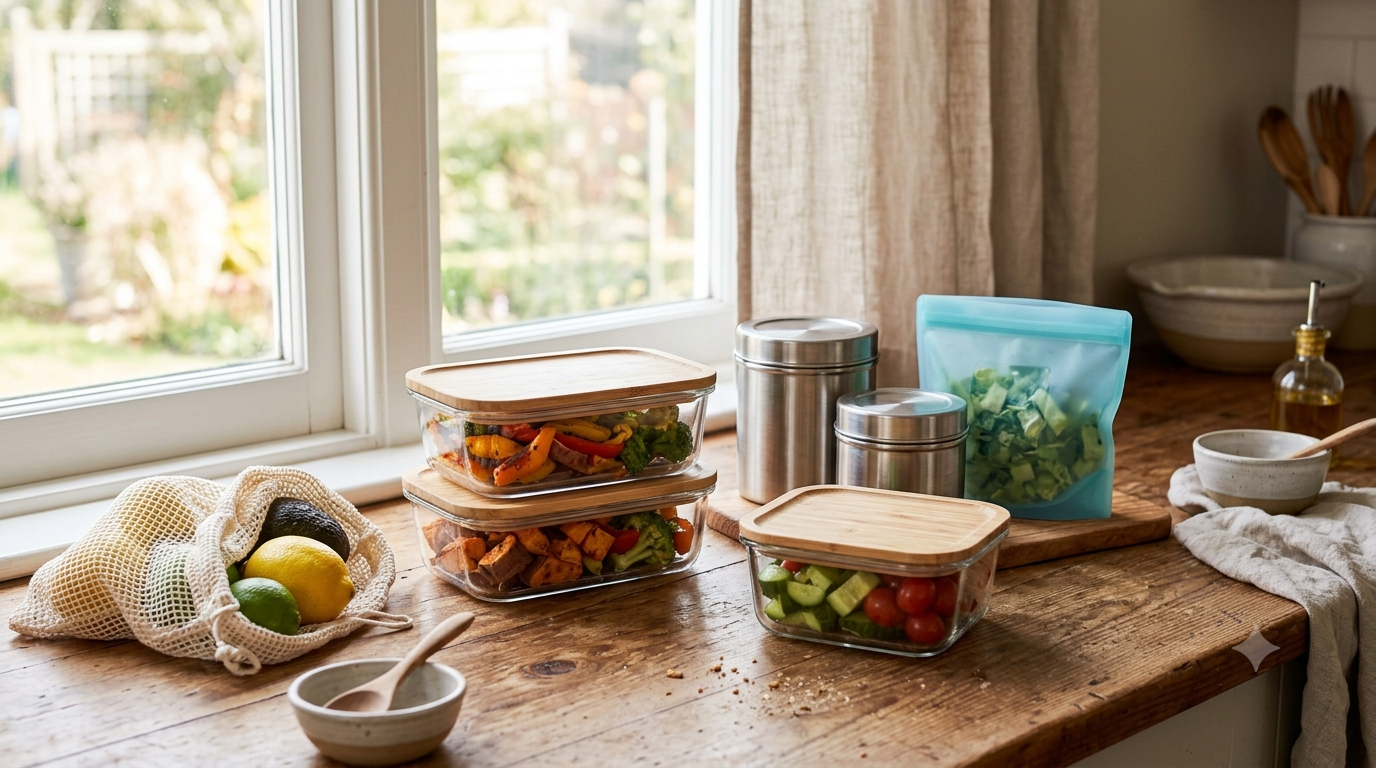
Transitioning to plastic free kitchen food storage is one of the most effective ways to eliminate microplastics from your diet while extending the shelf life of fresh produce. Conventional plastic containers and cling wraps can leach harmful chemicals like phthalates and bisphenols into food—especially when exposed to warm dishes or oily ingredients.
By replacing single-use plastic wraps and worn tupperware with non-porous, highly durable alternatives, you can protect your health and create a cleaner, visually organized pantry and refrigerator.
Key Takeaways
- Glass & Borosilicate Containers: Non-porous, stain-resistant, and completely non-toxic; ideal for meal prepping, reheating leftovers, and long-term pantry organization.
- Stainless Steel Canisters: Lightweight, unbreakable, and light-blocking, making them perfect for dry staples, snacks, and portable lunches.
- Beeswax Wraps & Silicone Covers: Flexible, reusable alternatives to single-use cling film that keep cheese, cut fruits, and bowls tightly sealed.
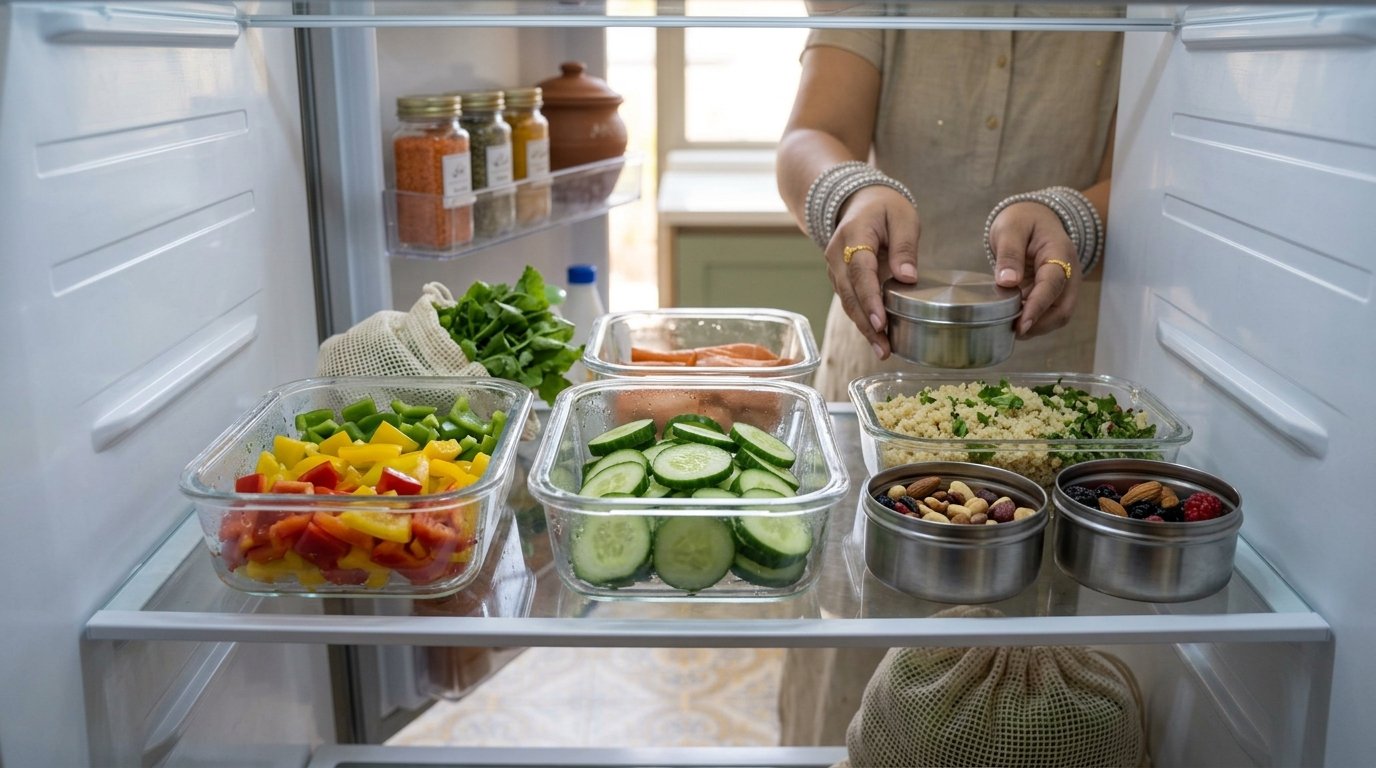
- Natural Fabrics for Produce: Breathable organic cotton bags and damp linen wraps prevent condensation buildup, keeping leafy greens crisp for longer.
Non-Toxic Materials for Plastic-Free Food Storage
Building a non-toxic storage system requires replacing synthetic polymers with inert, food-safe materials that do not degrade or absorb food odors over time.
Glass Storage Solutions
Borosilicate glass withstands rapid temperature shifts, making it safe to transfer directly from freezer to oven. Glass containers keep food tasting pure, resist tomato and turmeric stains, and allow you to see leftovers easily, reducing accidental food waste.
Food-Grade Stainless Steel
Stainless steel containers offer an indestructible alternative for freezer storage and dry pantries. Because stainless steel is completely opaque, it protects light-sensitive pantry staples like coffee beans, nuts, and seed oils from oxidation and rancidity.
Replacing Cling Wrap and Plastic Bags
Ditching single-use plastics does not mean sacrificing convenience or airtight sealing.
Beeswax Wraps and Platinum Silicone
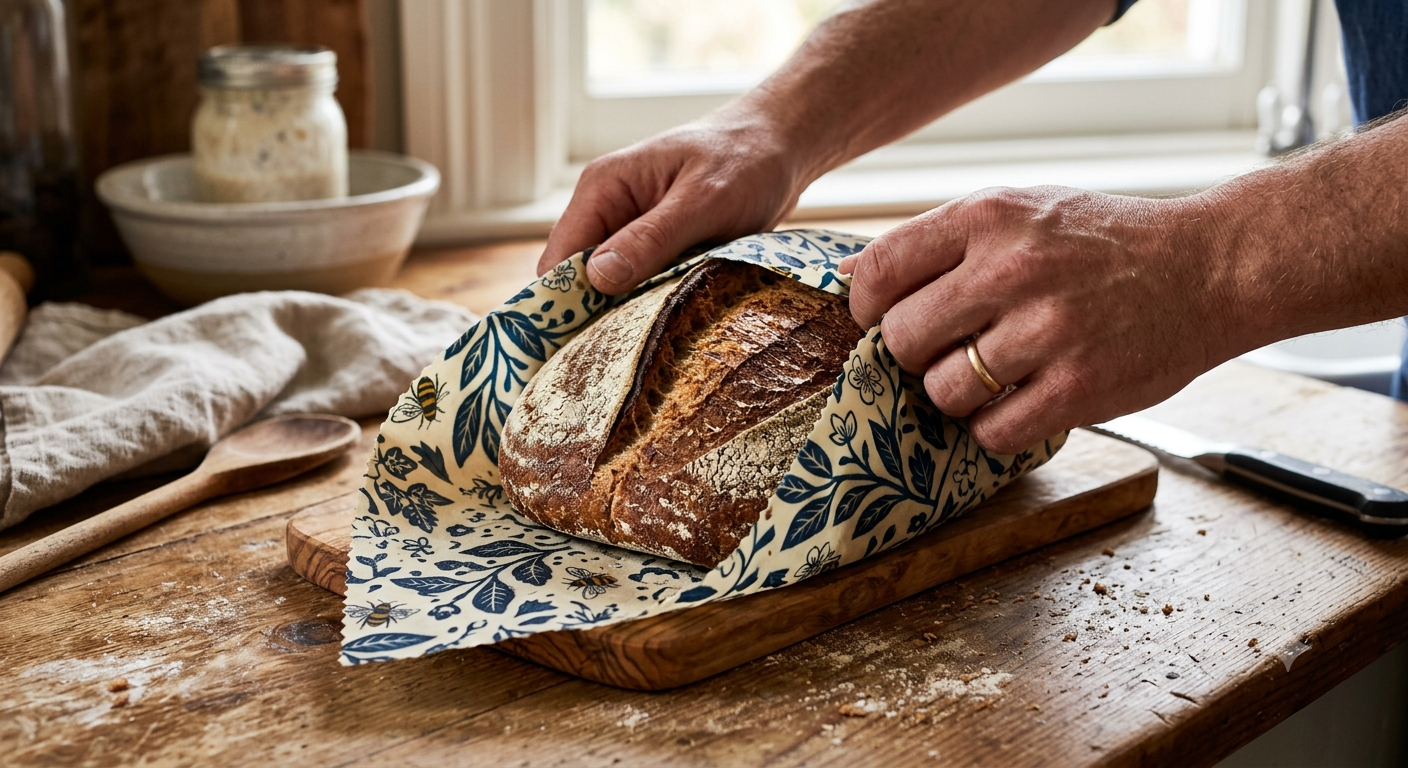
Beeswax wraps use the natural warmth of your hands to mold tightly around half-cut avocados, blocks of cheese, or bread loaves. For liquid-heavy items or freezer freezing, pinch-loc platinum silicone bags provide an airtight, leak-proof seal without plasticizers.
Breathable Cotton Bags for Produce
Placing fresh herbs and greens in plastic bags traps moisture and accelerates spoilage. Storing root vegetables in dry cotton mesh bags and wrapping leafy greens in damp linen towels allows proper airflow while maintaining ideal humidity.
Step-by-Step Transition Plan for Beginners
Swapping your storage collection does not need to happen all at once or cost a fortune.
- Audit Your Current Supply: Discard scratched or warped plastic containers first, as damaged plastics leach chemicals at higher rates.
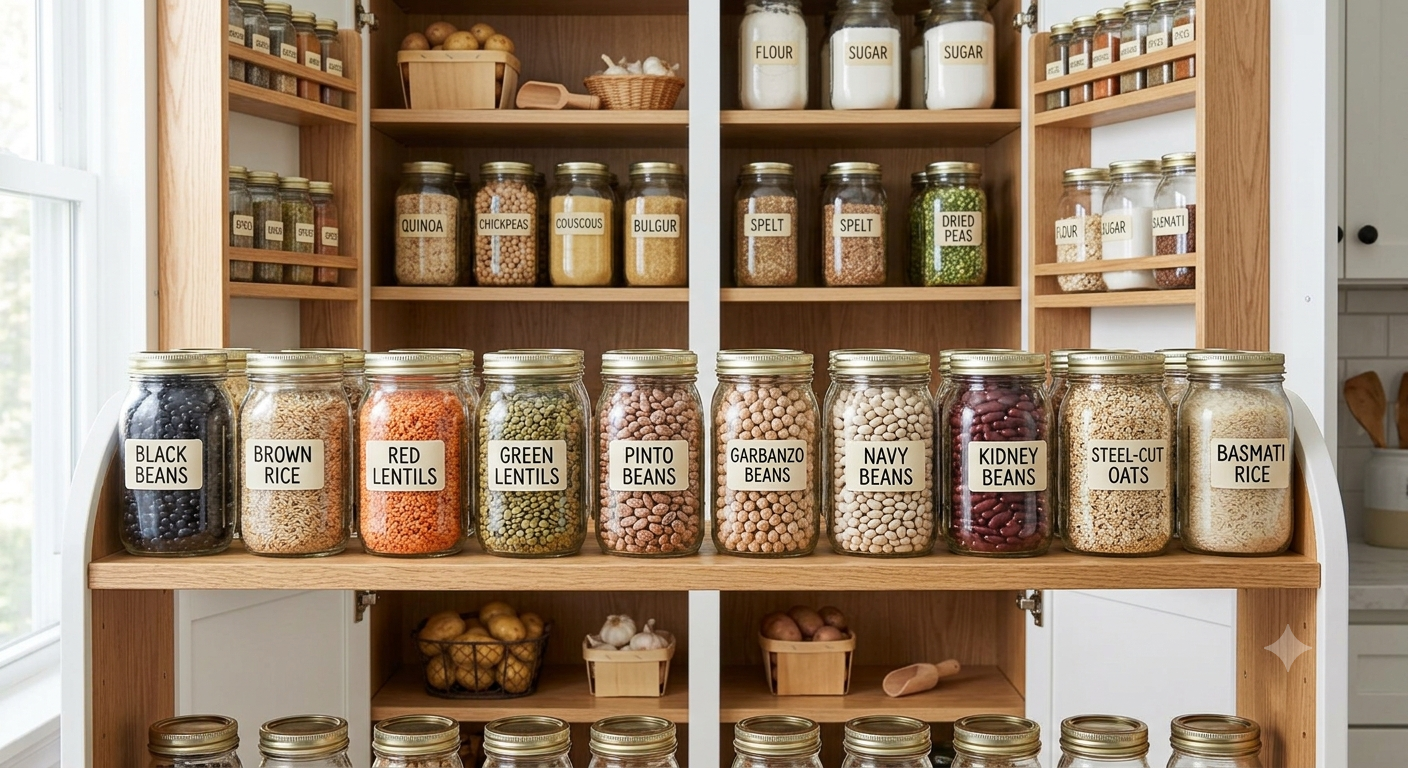
- Upcycle Glass Jars: Clean and reuse empty glass pasta sauce, pickle, and jam jars for storing dry grains, spices, and homemade stocks.
- Invest Gradually: Purchase high-quality glass or stainless steel sets in standard sizes during seasonal home sales..
Conclusion
Adopting plastic free kitchen food storage protects your family from food-contact microplastics while keeping your pantry organized and fresh. By repurposing glass jars, adopting beeswax wraps, and investing in durable stainless steel and glass containers, you can create a safer, eco-friendly kitchen space built to last.
Frequently Asked Questions
Can you freeze food in glass containers without plastic lids?
Yes. Use tempered or borosilicate glass containers designed for cold temperatures, leave an inch of space at the top for liquid expansion, and seal them with platinum silicone lids or stainless steel latch tops.
How do you clean and maintain beeswax wraps?
Wash beeswax wraps with cold water and mild dish soap using a soft sponge. Never use hot water, as heat melts the wax coating away from the cotton fabric base.
What is the safest non-plastic alternative for storing hot liquids?
Thermal-shock-resistant glass (such as mason jars) and food-grade 304 stainless steel thermos canisters are the safest non-plastic options for storing hot soups, broths, and sauces without chemical leaching.