
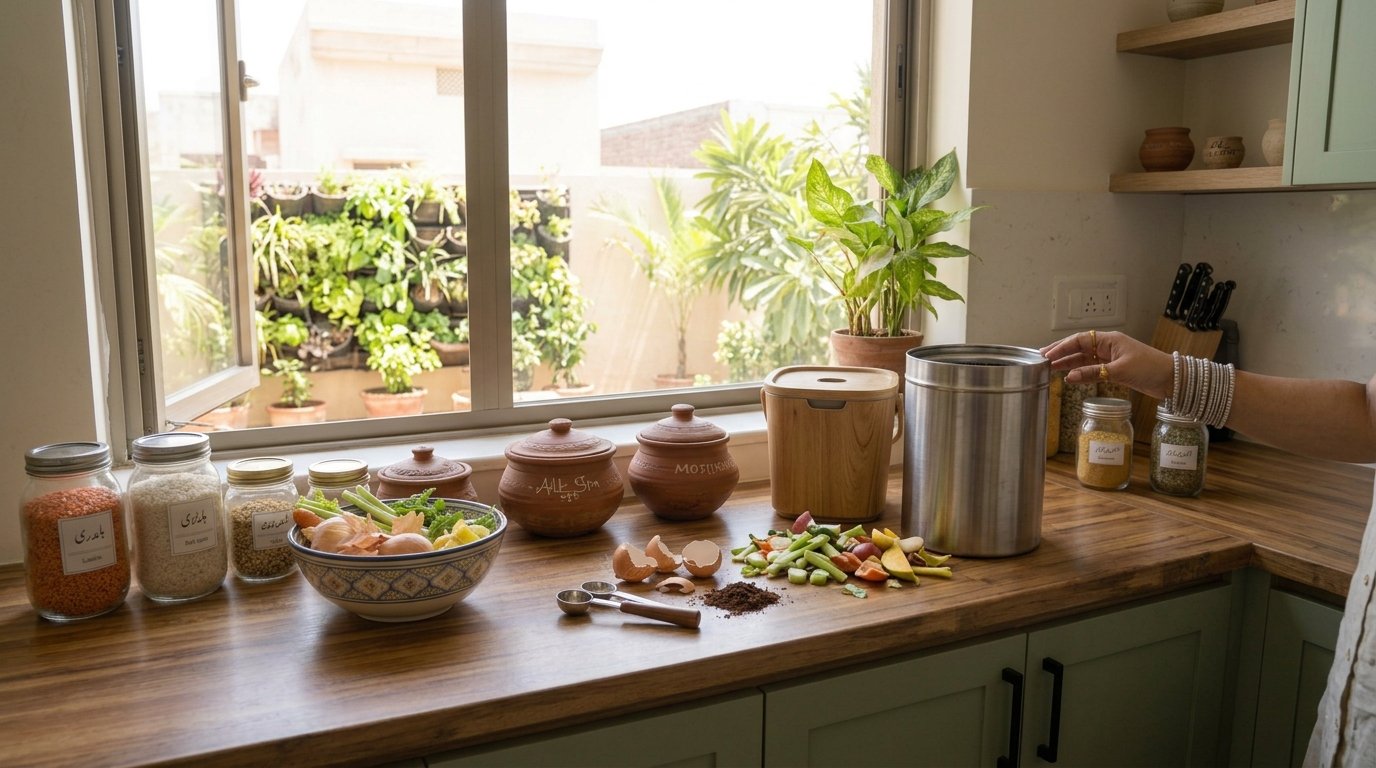
Living in a urban high-rise or rental unit does not mean you have to toss valuable food scraps into the trash. Following an effective apartment indoor kitchen composting guide allows city dwellers to divert organic waste from landfills, generate nutrient-rich plant food, and maintain an entirely odor-free kitchen environment.
Modern composting technologies make indoor food waste management clean, compact, and completely manageable regardless of square footage.
Key Takeaways
- Bokashi Fermentation: Ideal for small apartments; ferments all food scraps—including meat and dairy—in an airtight bin using anaerobic microbes.
- Vermicomposting (Worm Bins): Converts fruit and vegetable peels into premium worm castings using odorless red wigglers in compact stackable trays.
- Countertop Electric Composters: Dehydrates and grinds food waste within 4 to 8 hours, reducing scrap volume by up to 90% at the touch of a button.
- Odor Prevention Essentials: Always maintain correct moisture levels, utilize active charcoal filters, and balance green (nitrogen) materials with brown (carbon) inputs.
Choosing the Best Indoor Composting System
Finding the right method for your apartment depends on your lifestyle, waste volume, and personal comfort with biological processes.
1. Bokashi Composting (Fermentation Method)
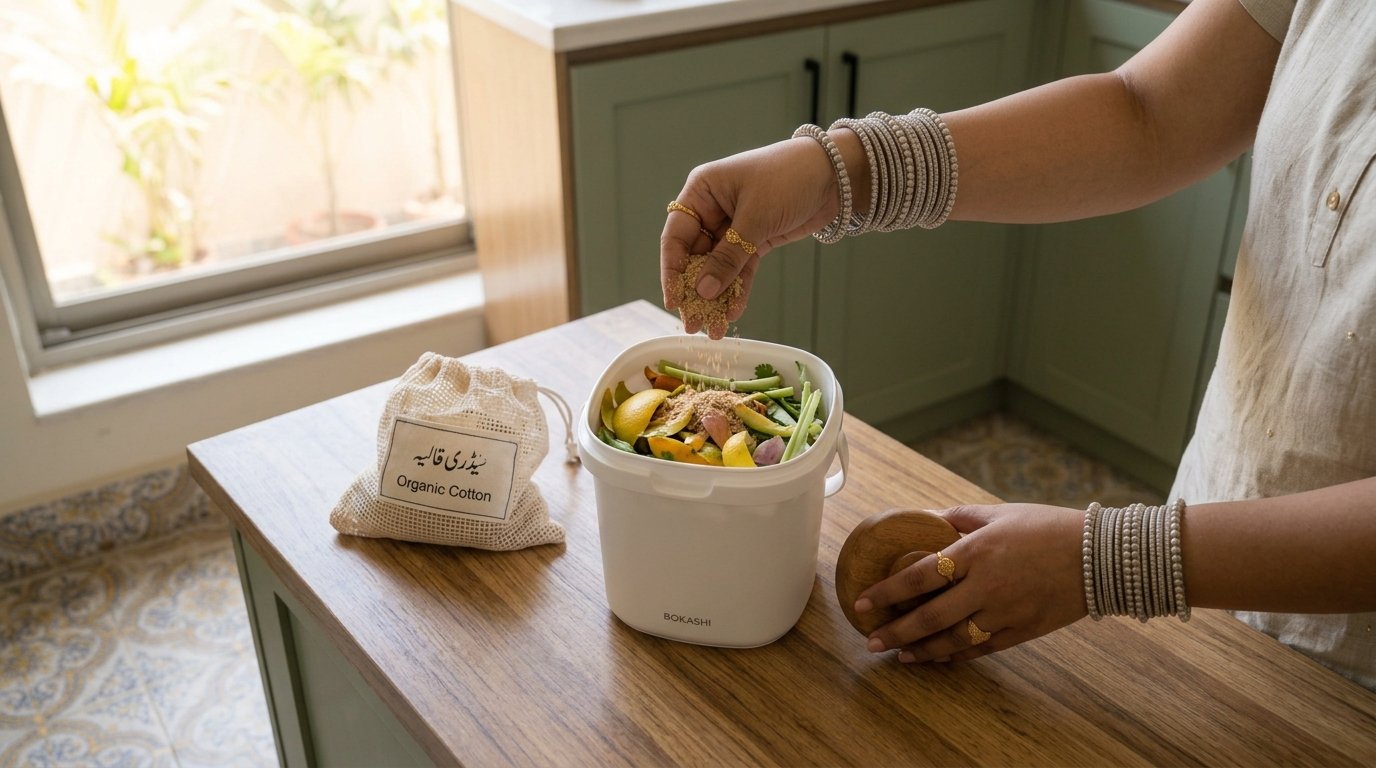
Bokashi is a Japanese method that ferments organic waste anaerobically using wheat bran inoculated with effective microorganisms (EM). Unlike outdoor composting, a Bokashi bucket stays sealed under your sink, accepts meat, bones, and cheese, and produces zero foul odors.
2. Indoor Vermicomposting
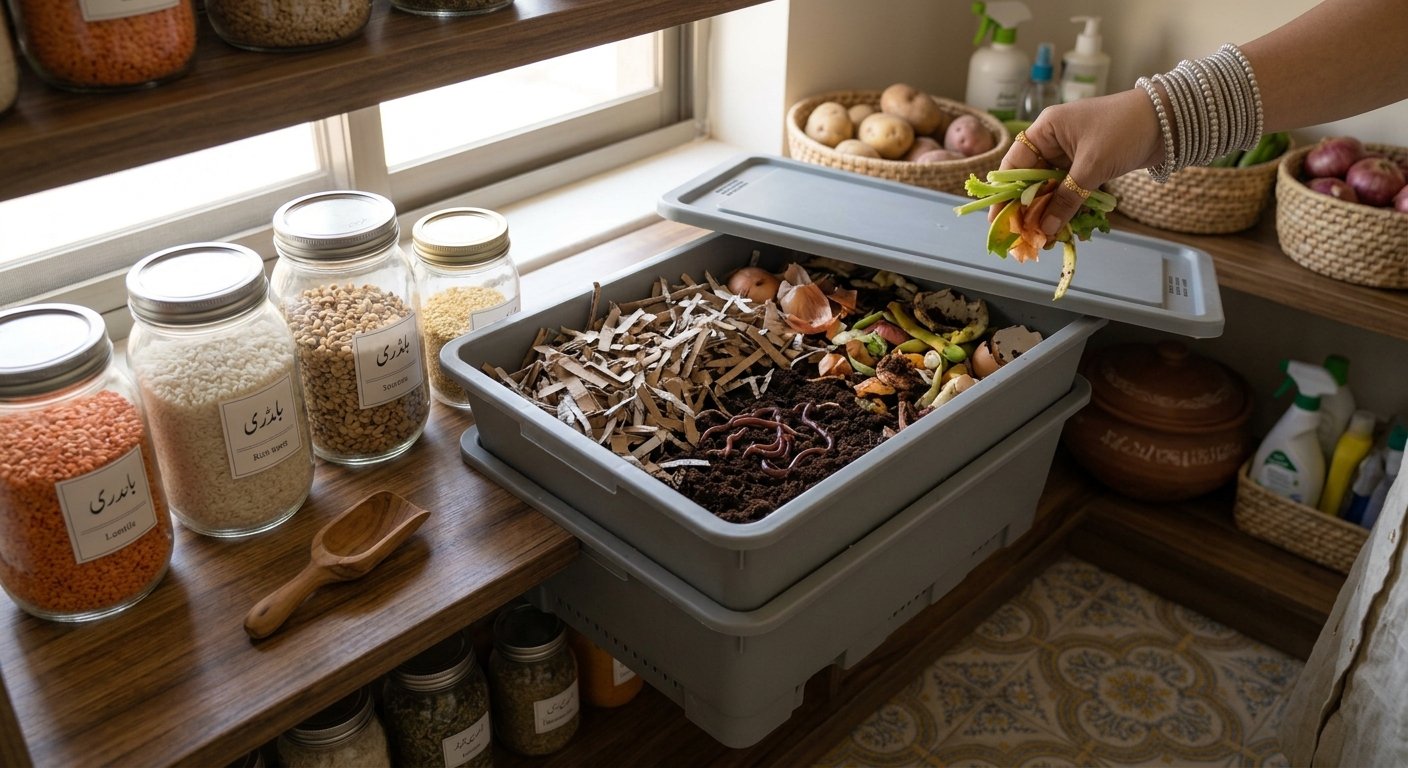
Vermicomposting uses dedicated red wiggler worms (Eisenia fetida) to digest fruit peels, coffee grounds, and shredded cardboard. Kept in a dark, ventilated bin under a pantry shelf, a well-managed worm bin smells like fresh forest soil.
3. Electronic Kitchen Composters
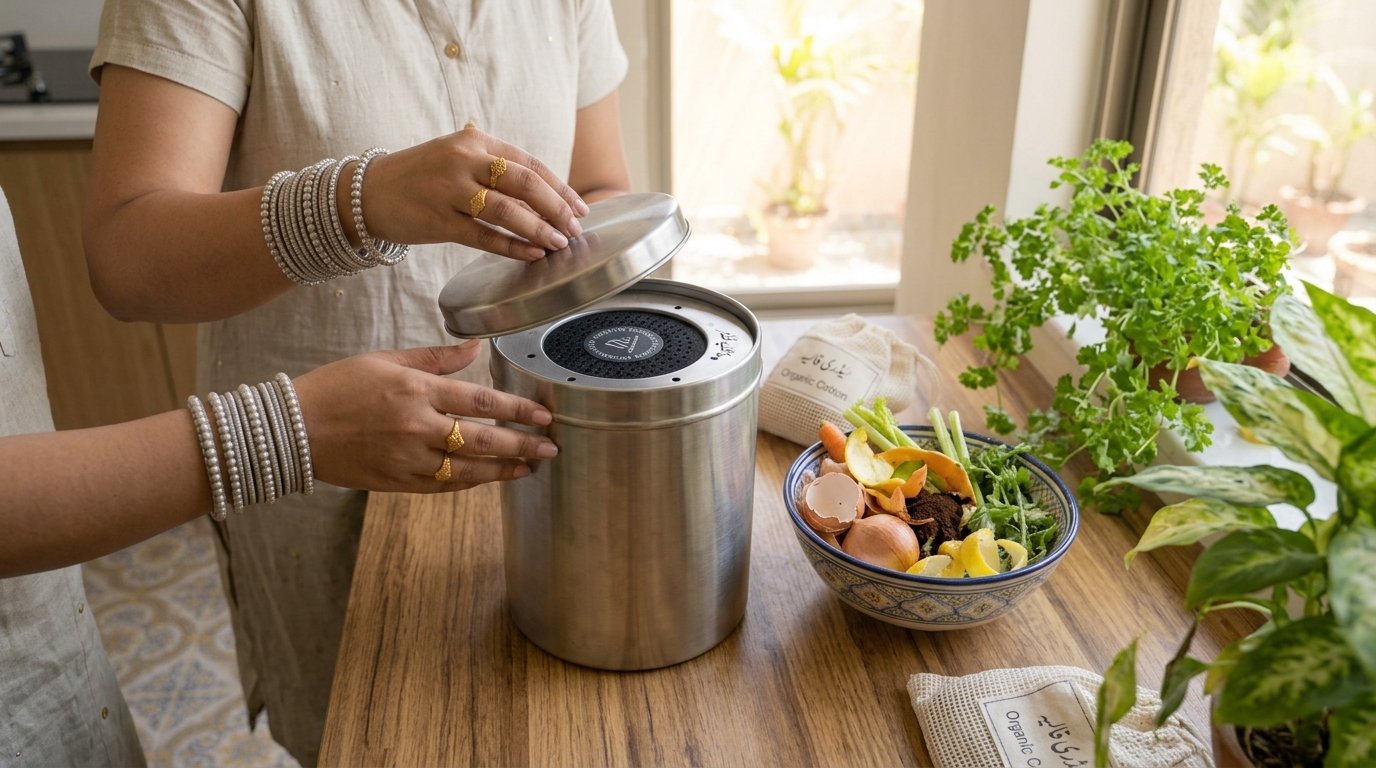
For ultimate convenience, electric appliances heat, dehydrate, and pulverize food scraps overnight. They produce a dry, sterile soil amendment quickly without requiring microbes or insects.
Essential Rules for Odorless Apartment Composting
To keep your apartment fresh, maintaining proper moisture and nutrient ratios is non-negotiable.
Balance “Greens” and “Browns”
In worm bins and aerobic composters, bad smells occur when nitrogen-heavy “greens” (food scraps) overpower carbon-heavy “browns” (shredded newspaper, egg cartons, or coco coir). Aim for a ratio of roughly two parts brown material for every one part green scrap added.
Temperature and Aeration Control
Ensure aerobic bins have adequate ventilation holes lined with breathable mesh or active charcoal filters to neutralize lingering aromas before air recirculates through your living space.
Step-by-Step Setup Guide for Beginners
Launching your home system requires minimal equipment and prep.
- Select a Location: Pick a temperature-stable, dark space like under the kitchen sink, inside a coat closet, or on a sheltered balcony.
- Collect Daily Scraps: Store daily trimmings in a small stainless steel countertop container equipped with a charcoal lid filter.
- Process Waste Consistently: Drain liquid tea from Bokashi buckets weekly or add fresh bedding to worm bins whenever adding dense food scraps.
Conclusion
Implementing a reliable apartment indoor kitchen composting guide proves that small-space living is no barrier to environmental stewardship. Whether you choose the versatile Bokashi fermentation bucket, an efficient red wiggler worm bin, or a modern electric dehydrator, turning kitchen waste into nutrient-rich soil enrichment is clean, simple, and rewarding.
Frequently Asked Questions
Will indoor kitchen composting attract fruit flies and pests?
No. When using sealed systems like Bokashi or keeping proper carbon bedding over food scraps in worm bins, flies cannot access food to lay eggs.
Can you compost meat and dairy in an apartment bin?
You can safely compost meat, bones, and dairy inside an airtight Bokashi bin because the anaerobic fermentation process breaks down tough proteins without rot. Avoid placing meat or dairy in traditional worm bins or basic aerobic scrap collectors.
What should I do with finished compost if I don’t have a garden?
You can feed indoor house plants, donate finished compost or Bokashi soil builder to local community gardens, or drop it off at municipal organic waste collection sites.
1 thought on “Composting: Apartment Indoor Kitchen Composting Guide for Small Spaces”