
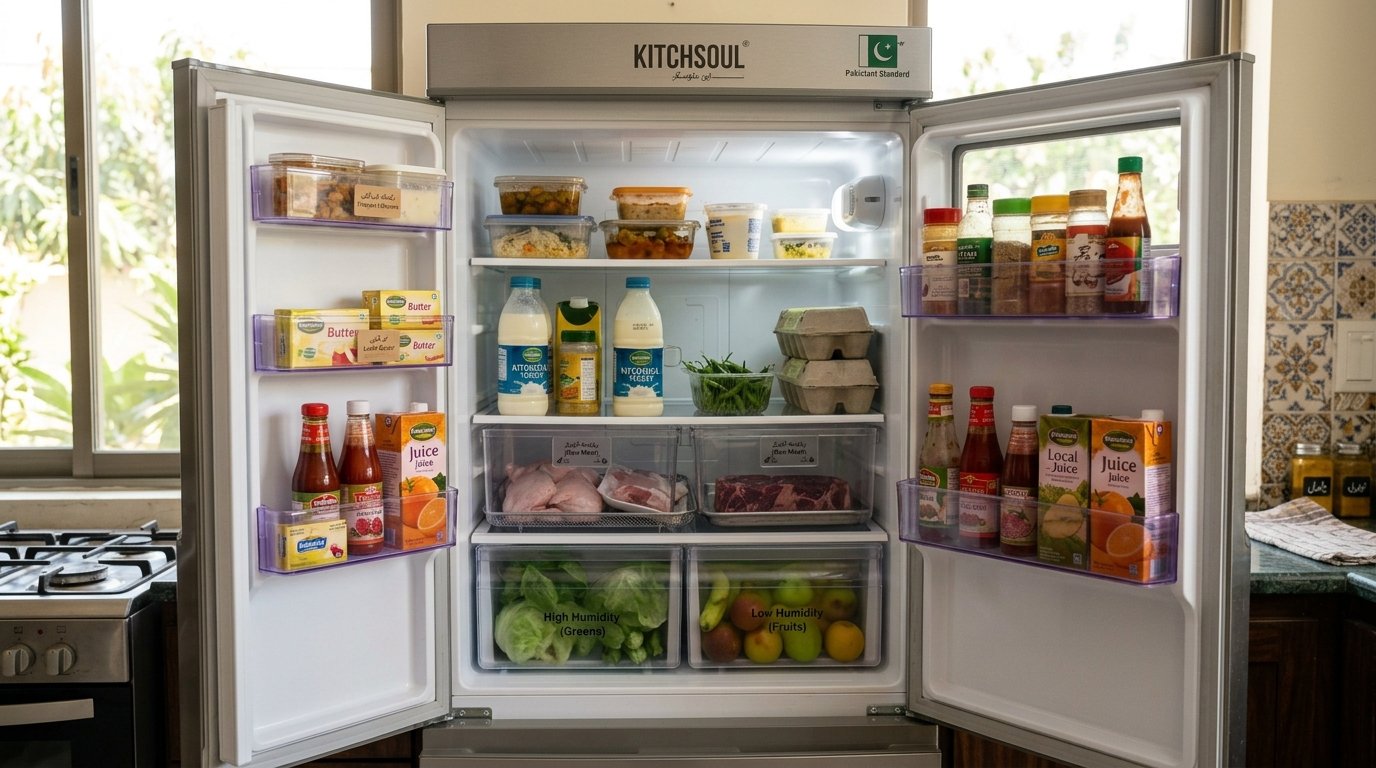
Improper food storage is one of the leading causes of household food spoilage and wasted grocery budgets. Most people load groceries wherever open space permits, unaware that temperatures vary significantly between the top shelf, bottom shelf, and door bins. Learning how to arrange your fridge to prevent food waste relies on matching specific food groups to the thermal microclimates inside your appliance.
By establishing dedicated storage zones, managing crisper drawer humidity, and practicing basic inventory rotation, you can double the shelf life of fresh produce and keep leftovers safe and visible.
Key Takeaways
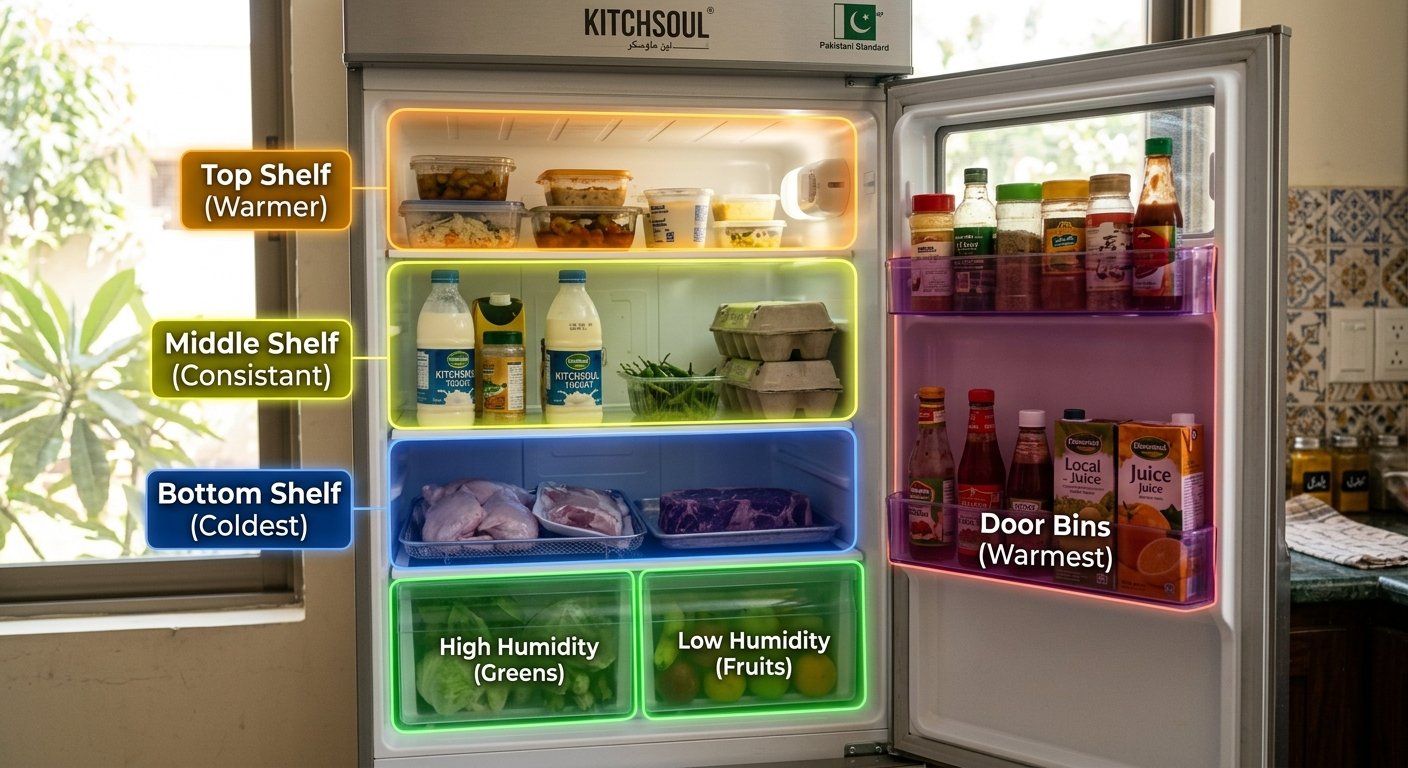
- Temperature Zones Matter: Warm air rises; the top shelves and door bins are warmer, while the back of the bottom shelf is the coldest area.
- Store Raw Meat on the Bottom: Always place raw poultry, meat, and seafood on the lowest shelf inside a rimmed tray to prevent cross-contamination from drips.
- Master Crisper Humidity: High humidity preserves wilting greens and thin-skinned produce; low humidity lets ethylene-releasing fruits vent gas to prevent premature decay.
- Keep Eggs & Milk Off the Door: Fluctuating door temperatures cause dairy and eggs to spoil faster. Move them to internal main shelves.
The Science of Fridge Temperature Zones
Refrigerators are not uniformly cold. Air currents and mechanical compressor locations create distinct thermal microclimates throughout the unit.
Setting your refrigerator to maintaining an overall internal temperature between $35^\circ\text{F}$ and $38^\circ\text{F}$ ($1.6^\circ\text{C}$ to $3.3^\circ\text{C}$) ensures food stays out of the bacteria danger zone while keeping produce from freezing.
Step-by-Step: Where Every Food Item Belongs
To effectively arrange your fridge to prevent food waste, follow this professional zone breakdown:
1. The Top Shelves (Warmest & Most Consistent)
The upper shelves maintain the most consistent temperature. Store ready-to-eat items that do not require cooking:
- Leftovers in clear glass containers
- Prepped meals and takeout
- Ready-to-eat deli meats and cheeses
- Fresh herbs (stored upright in a glass of water)
2. The Middle Shelves (Moderate Cold)
Ideal for items needing consistent refrigeration without freezing risks:
- Dairy products (yogurt, sour cream, cottage cheese)
- Milk jug (placed near the back, not on the door)
- Eggs in their original carton
3. The Bottom Shelf (Coldest Zone)
This area remains the coldest part of the main compartment. It is essential for food safety to keep raw proteins here:
- Raw chicken, beef, pork, and seafood
- Defrosting meats (always placed on a rimmed tray)
Step 4: Mastering Crisper Drawers & Humidity Control
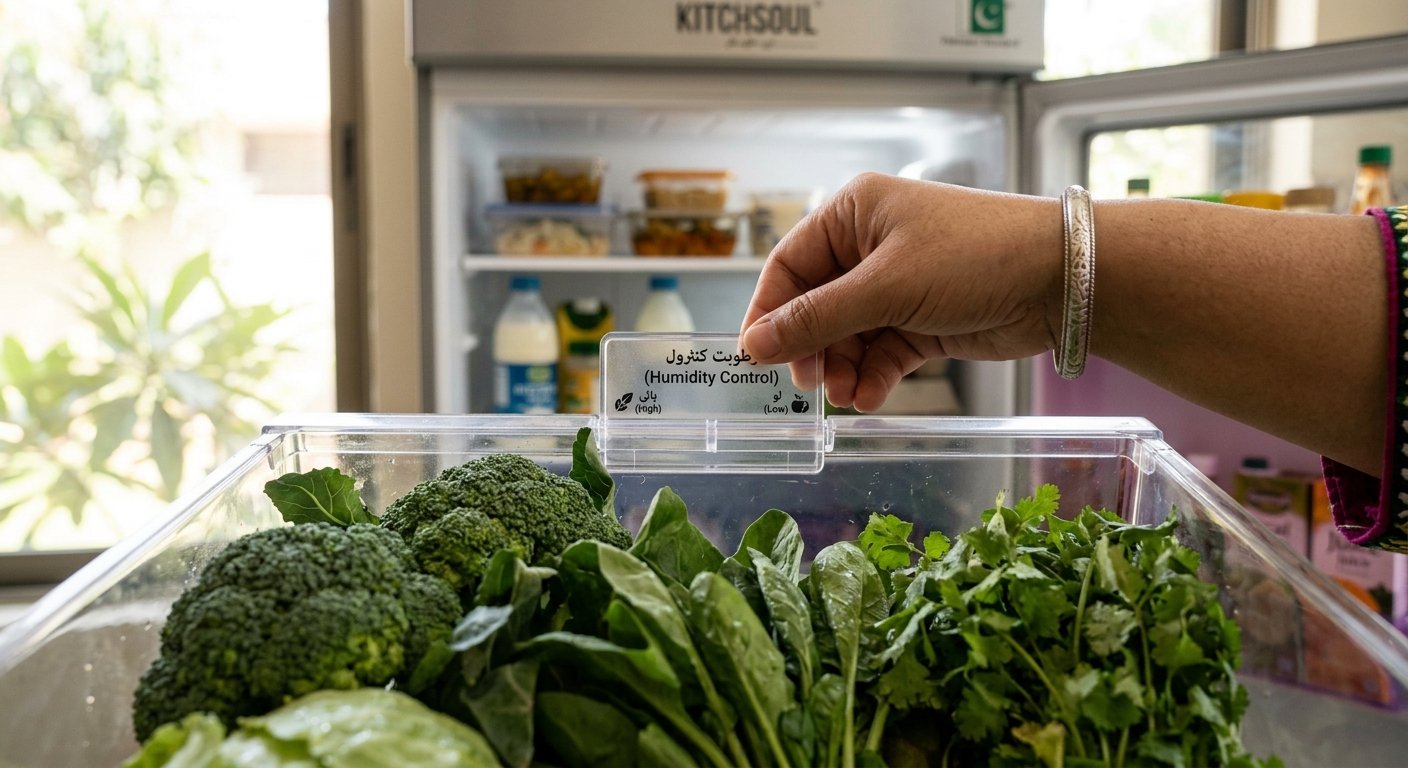
Crisper drawers control airflow to regulate humidity levels. Knowing how to set these sliders is critical to extending produce freshness.
High-Humidity Drawer (Vents Closed)
Closing the vent traps moisture, creating a humid environment for produce sensitive to water loss or wilting:
- Leafy greens (spinach, kale, lettuce)
- Broccoli, cauliflower, and carrots
- Cucumbers, herbs, and berries
Low-Humidity Drawer (Vents Open)
Opening the vent lets ethylene gas escape. Ethylene is a natural ripening gas released by certain fruits that accelerates rot in surrounding produce:
- Apples, pears, and stone fruit
- Avocados, melons, and citrus
Step 5: The “First In, First Out” (FIFO) Method
Organization means little if food gets pushed to the dark back corners of shelves.
- Create an “Eat First” Station: Designate a clear bin on the top shelf for items expiring within 2–3 days (open condiments, leftover portions, sliced produce).
- Rotate New Groceries: When restocking, push older jars and packages to the front and put newly purchased items behind them.
Conclusion
Taking time to arrange your fridge to prevent food waste pays immediate dividends in fresher meals, reduced food spoilage, and lower grocery expenditure. By matching items to their ideal temperature zones, managing humidity drawers, and keeping expiring food visible, you can maintain an efficient, organized kitchen.
Frequently Asked Questions
Why shouldn’t milk and eggs be stored on the fridge door?
The refrigerator door is subject to constant warm air exposure every time the fridge opens. Storing perishable dairy products like milk and eggs on the door accelerates bacterial growth and causes premature souring. Keep them on an interior shelf instead.
Should tomatoes and onions be stored in the refrigerator?
No. Whole onions should be stored in a cool, dark, well-ventilated pantry (away from potatoes). Cold temperatures in the fridge convert tomato starches into sugars, damaging their cellular structure and causing a mealy texture and muted flavor.
How often should you clean and re-organize your fridge?
Perform a quick inventory check and wipe-down weekly right before grocery shopping. Conduct a deep clean—removing shelves and washing drawers with warm soapy water—every 3 to 4 months.
1 thought on “Fridge Management: The Correct Way to Arrange Your Fridge to Prevent Food Waste”