
A cluttered pantry makes meal preparation stressful, leads to duplicate grocery purchases, and wastes precious kitchen space. If you are working with a tiny cupboard or a narrow reach-in cabinet, learning how to organize a small kitchen pantry on a budget can completely transform your daily cooking routine without breaking the bank.
Smart pantry organization isn’t about buying expensive custom cabinetry or high-end matching acrylic bins. By combining vertical space-saving strategies, inexpensive container hacks, and clear inventory zones, you can build a functional, beautiful pantry system on a modest budget.
Key Takeaways
- Maximize Vertical Elevation: Use inexpensive shelf risers and stackable bins to utilize forgotten vertical height between shelves.
- Decant Staples into Clear Containers: Store bulk items like flour, rice, and oats in clear glass jars to easily track inventory and prevent food waste.
- Utilize Door Real Estate: Install an over-the-door hanging organizer to instantly gain up to 30% more storage for spices, oils, and small packages.
- Group by Zones: Categorize items into functional groups (baking, snacks, canned goods, breakfast) to keep shelves clutter-free and easy to maintain.
Step 1: Purge, Clean, and Group by Zone
Before purchasing any storage solutions, take inventory of what you already own to avoid wasting money on unnecessary containers.
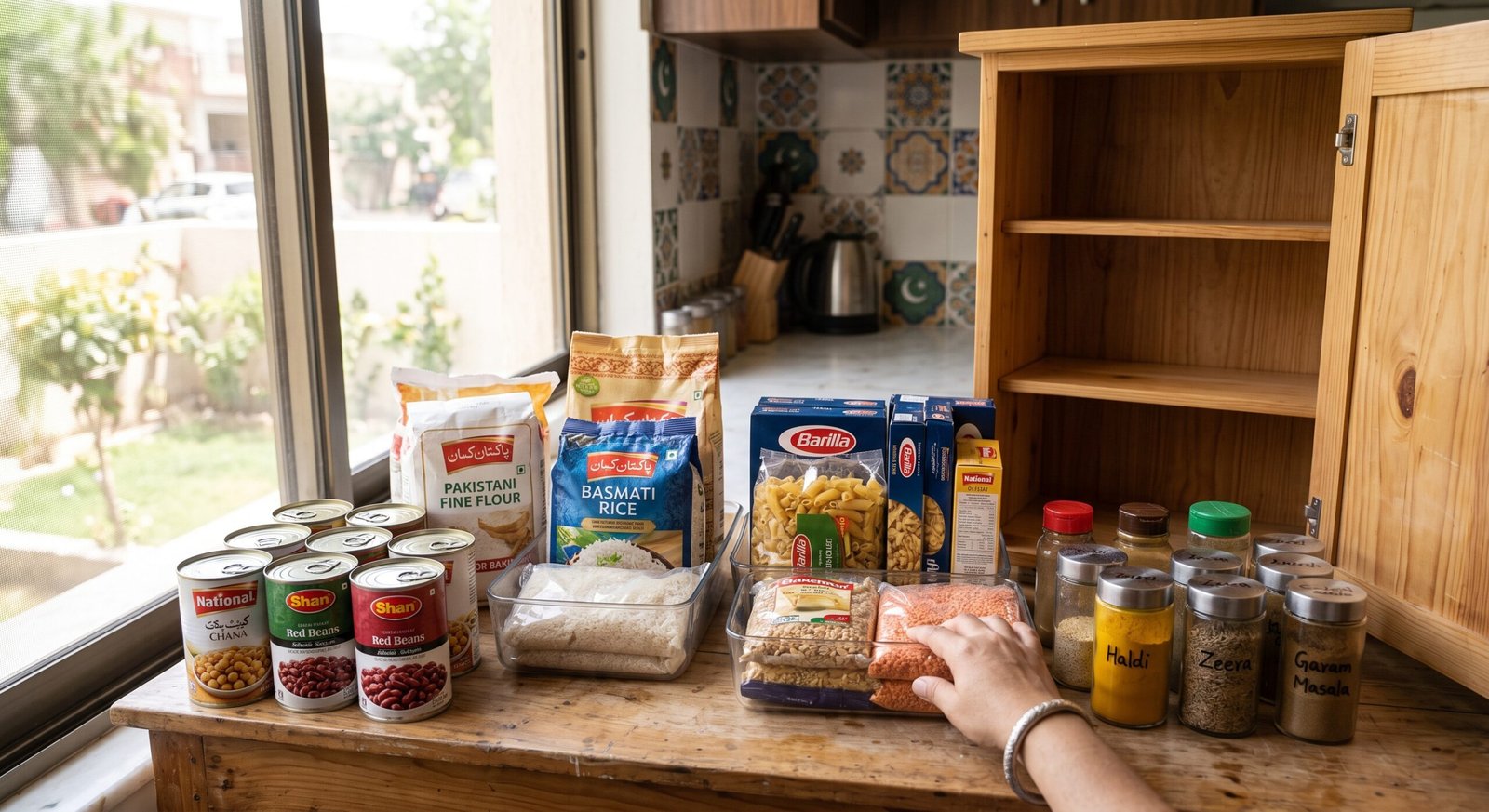
- Empty the Entire Pantry: Remove every item and place it on your kitchen counter or table.
- Discard Expired Items: Check expiration dates on canned goods, spices, and baking mixes. Toss anything expired or stale.
- Group into Zones: Categorize remaining items into logical cooking zones—such as Baking Basics, Dinner Grains & Pasta, Snacks, and Canned Goods.
Step 2: Budget Container Hacks & Decanting
Expensive matching container sets are unnecessary when trying to organize a small kitchen pantry on a budget. Inexpensive alternatives work just as effectively.
Glass Mason Jars & Thrift Store Containers
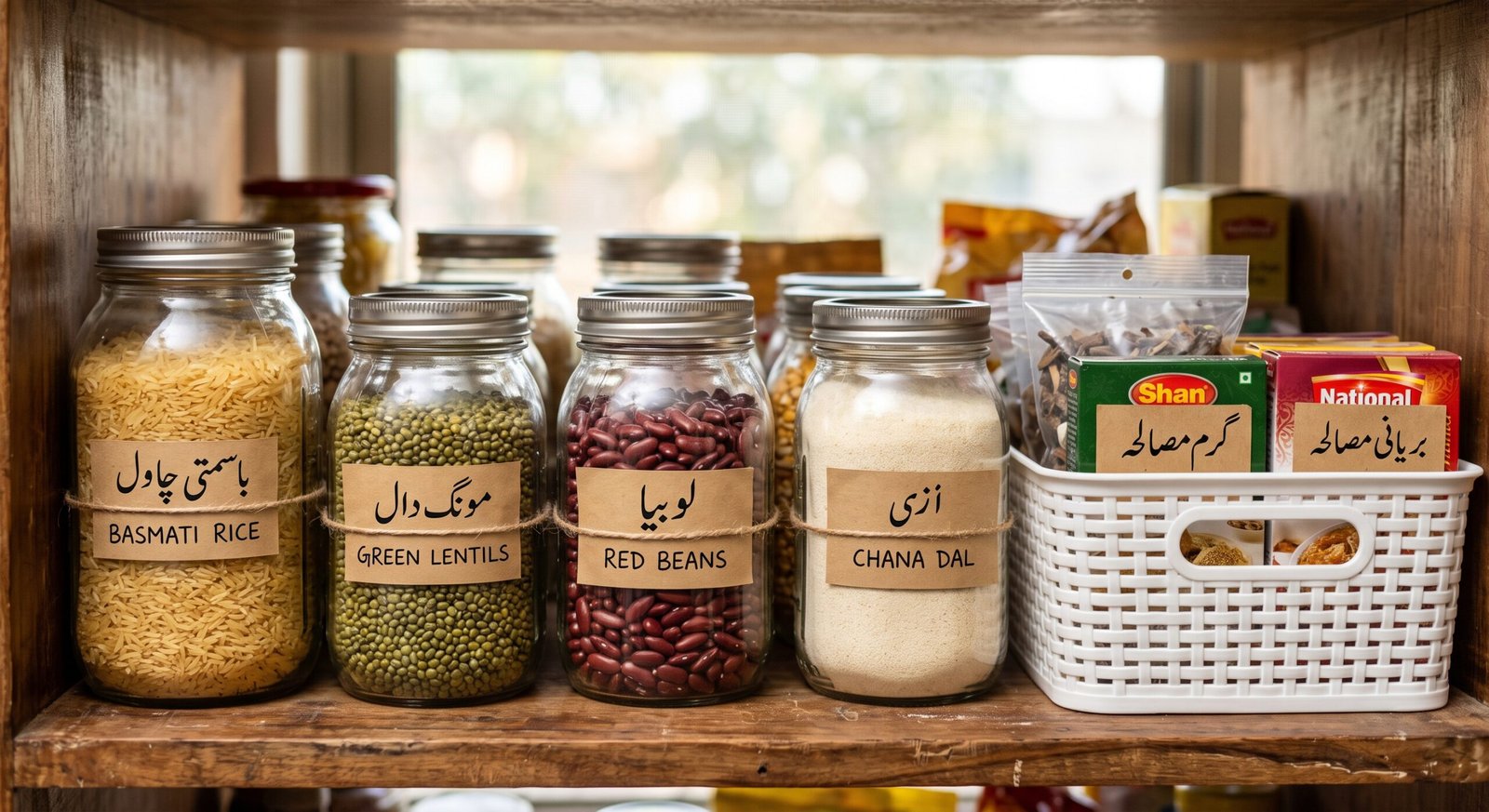
Large mason jars or recycled pasta sauce jars make excellent airtight containers for dry goods like lentils, sugar, quinoa, and nuts. Decanting removes bulky, awkward cardboard boxes, instantly saving horizontal shelf space.
Dollar Store Bins & Wire Baskets
Inexpensive plastic bins or wire baskets allow you to create “drawers” out of deep shelves. Pulling out a bin of snacks or baking supplies lets you view every item inside rather than losing items at the back of a cabinet.
Step 3: Utilize Unused Vertical and Door Space
In small pantries, the air space between shelves is often completely wasted.
Add Shelf Risers and Lazy Susans
Expand your usable space upwards:
- Wire Shelf Risers: Double your shelf capacity by stacking light items like canned goods or mugs above and below the riser.
- Turntables (Lazy Susans): Perfect for corner cabinets or high shelves where items like oils, vinegars, and condiments often get lost.
Over-the-Door Organizers
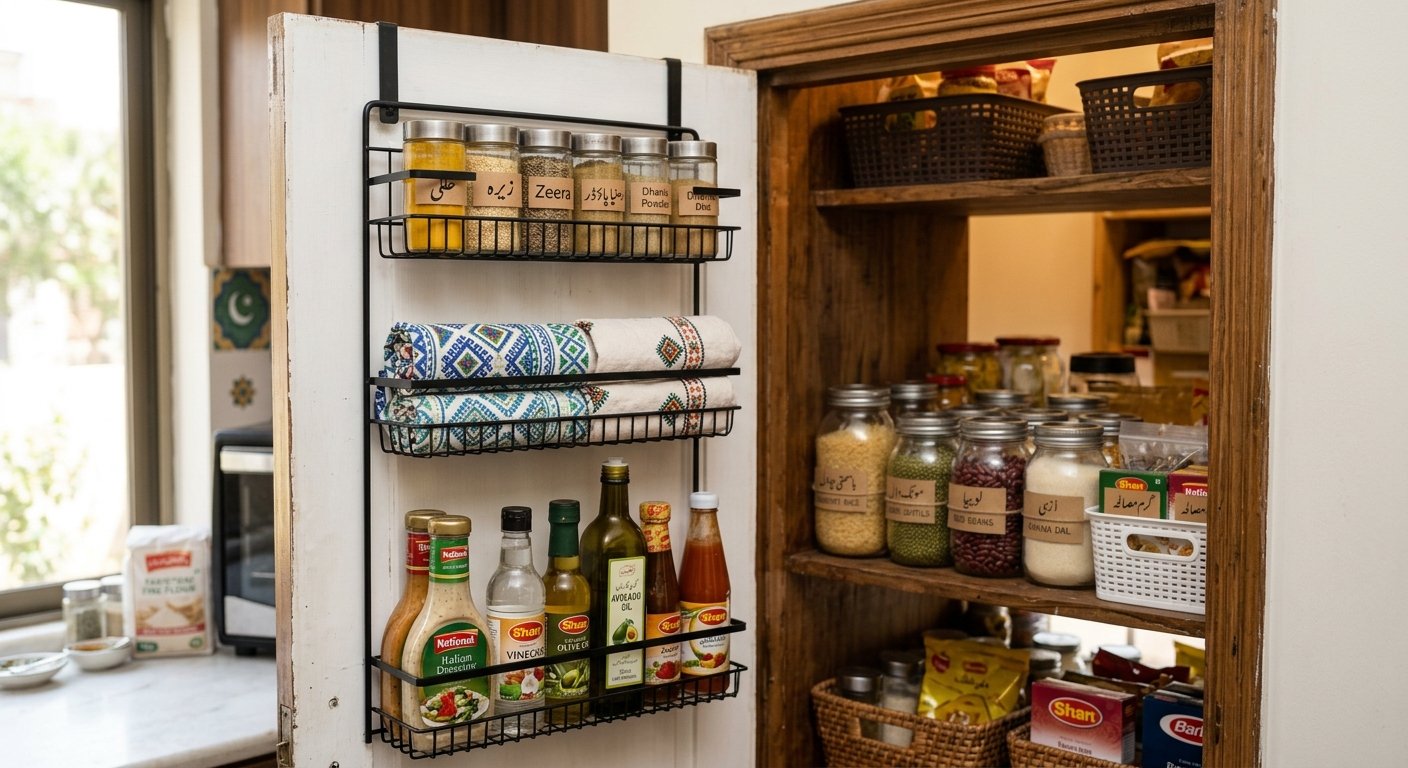
Hanging a pocket shoe organizer or shallow wire rack over the inside of your pantry door creates instant storage for spices, seasoning packets, tea boxes, and snack bars.
Conclusion
Successfully learning how to organize a small kitchen pantry on a budget relies on clever space utilization rather than costly containers. By purging expired goods, capitalizing on vertical space with risers, decanting into clear glass jars, and utilizing your pantry door, you can create an orderly, efficient food storage system that saves both time and money.
Frequently Asked Questions
What is the cheapest way to organize a small pantry?
The most affordable method is reusing glass food jars (like pickle or sauce jars) for decanting dry goods, purchasing basic storage bins from dollar stores, and organizing food strictly into categorized zones using homemade labels.
How do you organize a very deep, narrow pantry cabinet?
Use deep, clear pull-out bins that act like sliding drawers. Storing items inside pull-out containers prevents canned goods and packages from getting permanently hidden at the very back of the shelf.
Is decanting food into containers actually worth it for small spaces?
Yes. Commercial packaging (like oversized cereal boxes or bulky bag-in-box items) wastes significant volume. Transferring dry goods into uniform, stackable containers eliminates dead air space, keeping food fresher while maximizing shelf capacity.
Pingback: arrange your fridge to prevent food waste