
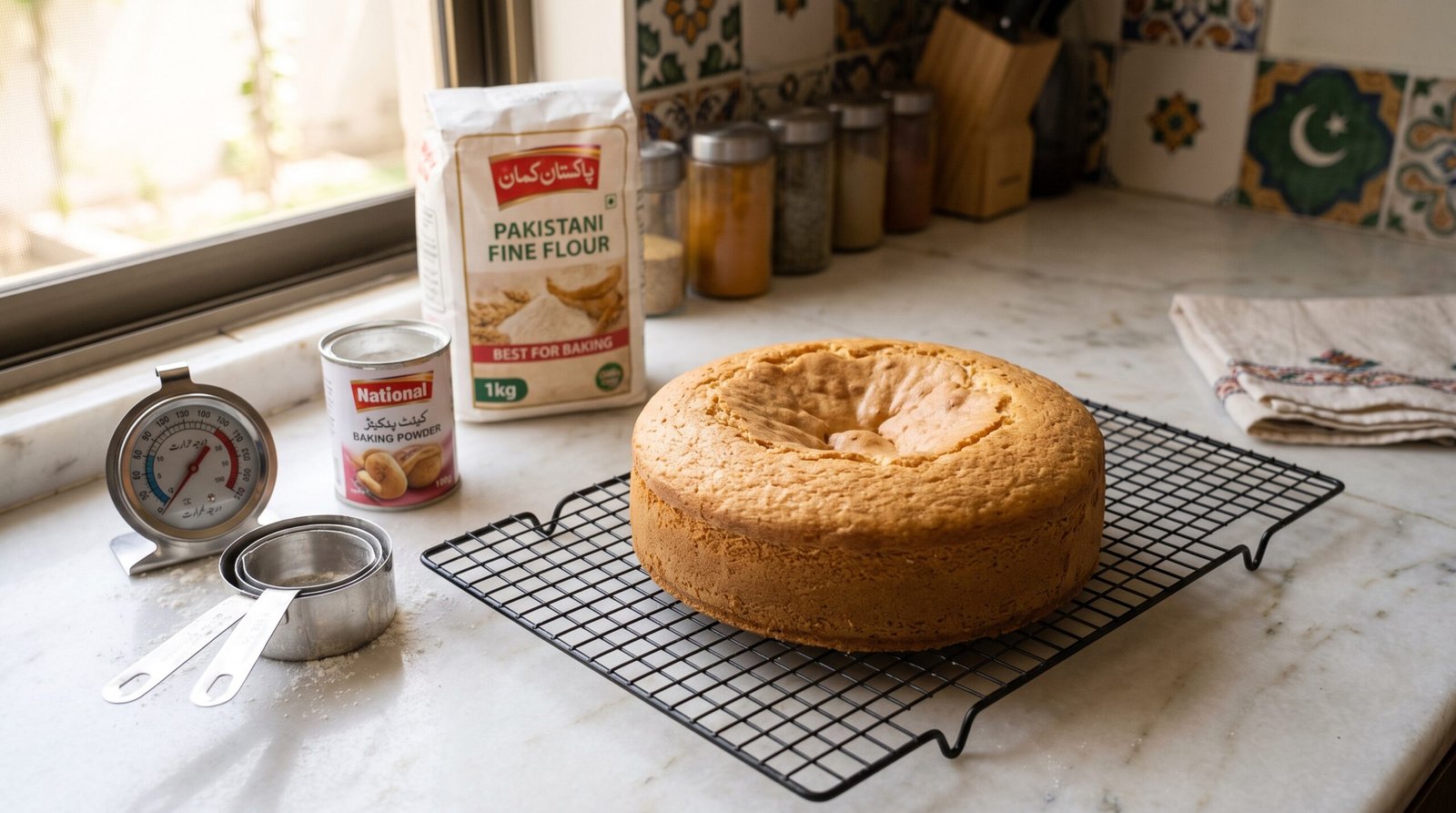
Baking Basics: Why Your Cakes Sink in the Middle and How to Fix It
Few baking mishaps are as disappointing as pulling a cake out of the oven only to watch its center crater inward as it cools. Understanding why cakes sink in the middle requires looking at baking as a delicate balance of chemistry, temperature, and structure.
When a cake collapses, it means the internal gas structure expanded faster than the gluten and egg proteins could set. By identifying the root cause—whether it’s an incorrect oven temperature, expired leavening agents, or opening the oven door too early—you can prevent sunken centers and ensure uniform, bakery-perfect layers every time.
Key Takeaways
- Leavening Overload: Too much baking powder or soda creates excess gas bubbles that merge, grow too large, and burst, causing the center structure to collapse.
- Oven Temperature Fluctuations: An oven running too cold delays protein setting, while opening the oven door too early causes a sudden cold draft that collapses delicate air cells.
- Over-Mixing Batters: Incorporating excessive air during creamed fat or flour stages creates weak air pockets that cannot hold their weight.
- Improper Pan Sizing: Using a pan that is too small or too deep causes the outer edges to bake while the middle remains undercooked and heavy.
1. Too Much (or Expired) Leavening Agent
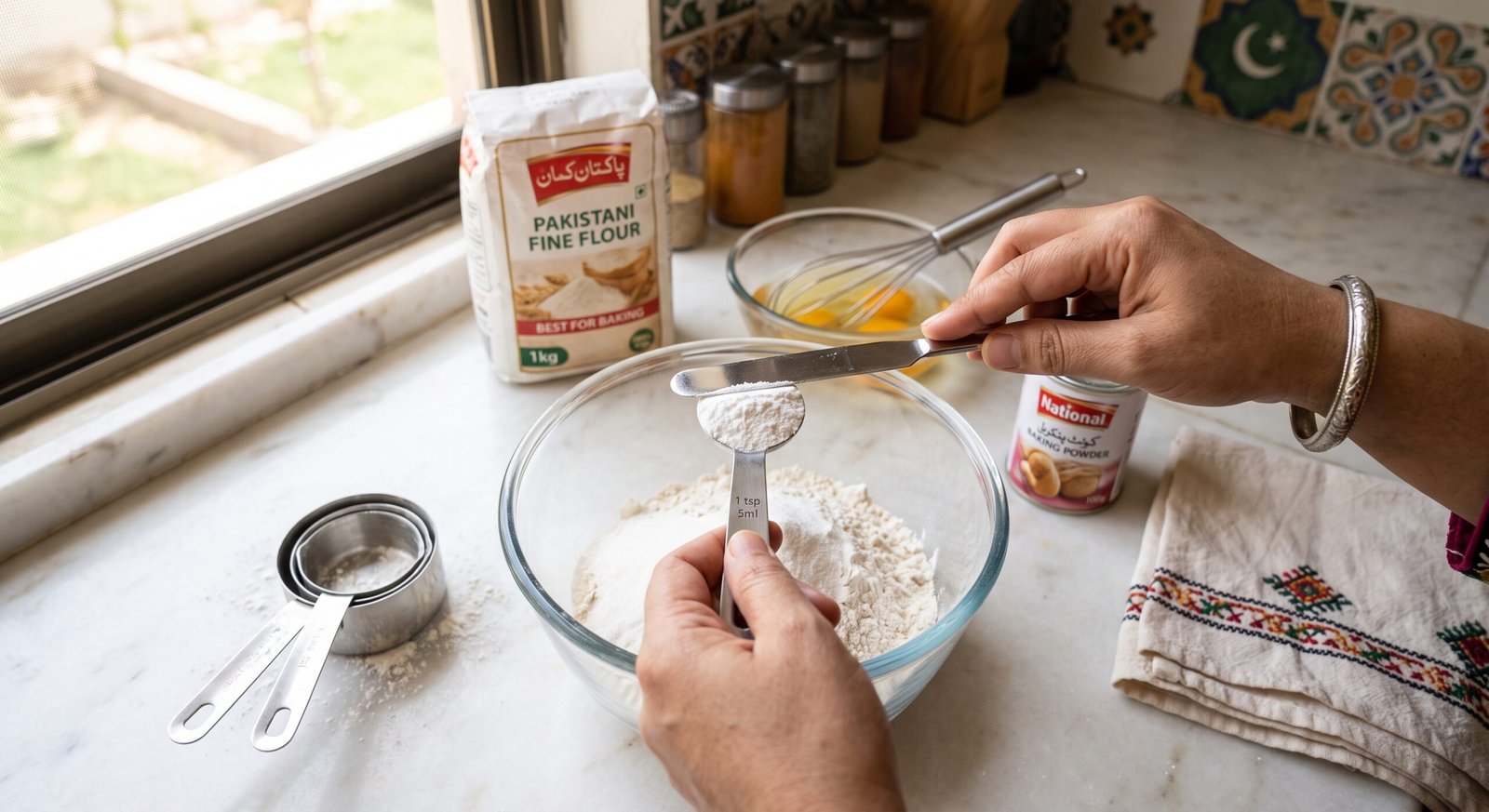
Leavening agents like baking powder and baking soda generate carbon dioxide gas when hydrated and heated. This gas creates trapped air pockets that give cakes their rise.
- The Problem: Adding too much baking powder causes gas bubbles to expand faster than the flour proteins (gluten) and egg proteins can set. The bubbles merge into large pockets, become unstable, and collapse under their own weight. Conversely, expired baking powder fails to provide consistent lift.
- The Fix: Measure leavening agents precisely with leveling spoons. Always test baking powder freshness by mixing 1/2 teaspoon into warm water; if it fizzes vigorously, it is active.
2. Opening the Oven Door Too Early
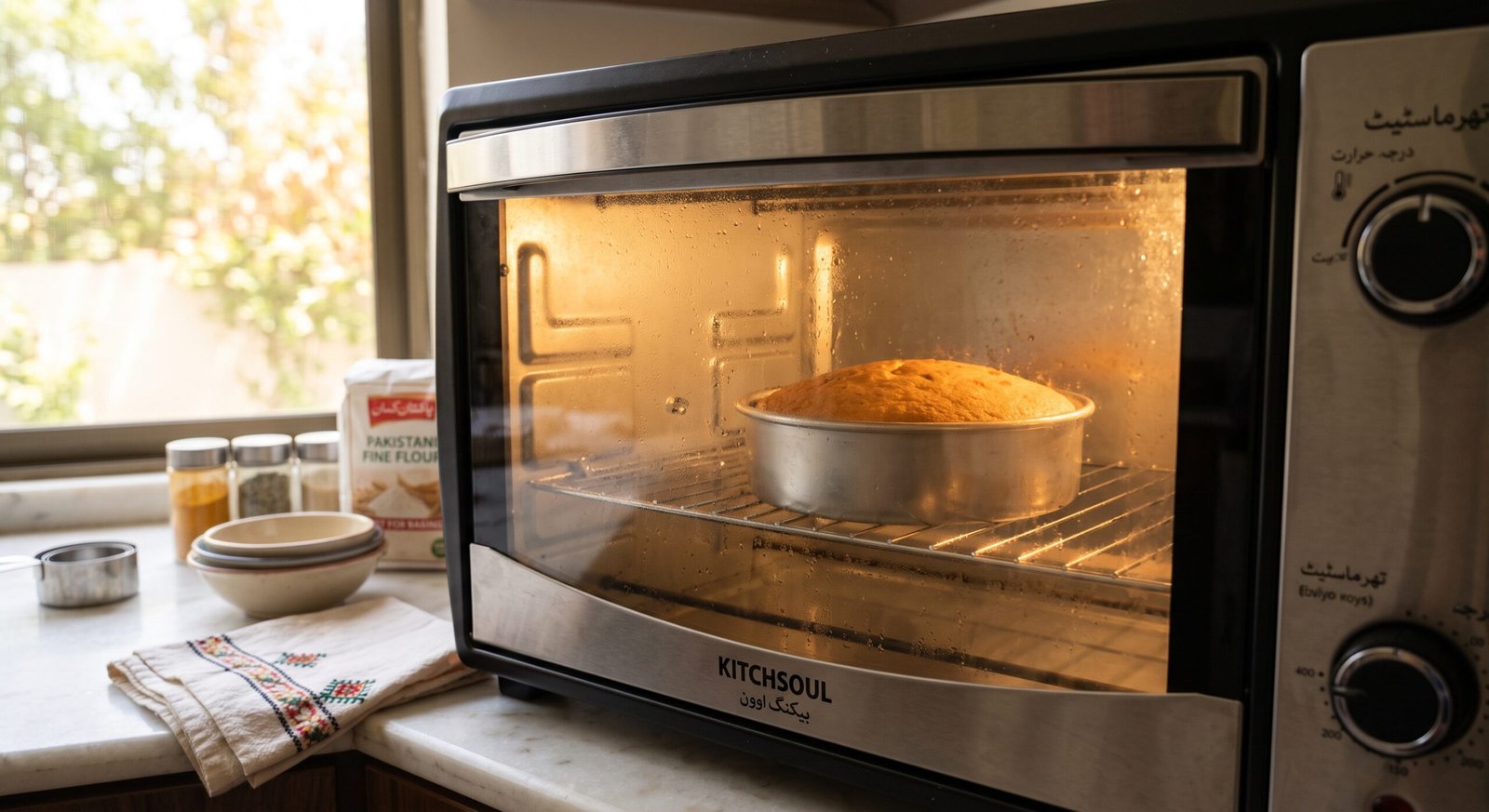
Curiosity often gets the better of home bakers, but opening the oven door mid-bake is a top reason why cakes sink in the middle.
- The Problem: In the first 60% of baking time, the cake’s internal structure relies entirely on delicate gas trapped in uncooked batter. Opening the door lets cold kitchen air rush in, dropping the internal cavity temperature. This sudden drop causes the warm air bubbles inside the cake to contract before the batter sets.
- The Fix: Keep the oven door closed until at least 75% to 80% of the suggested bake time has elapsed. Use the interior oven light to inspect progress instead.
3. Incorrect Oven Temperature & Inaccurate Calibration
Oven dials are notoriously inaccurate. Your oven may indicate $350^\circ\text{F}$ ($175^\circ\text{C}$), but its actual internal temp might be $325^\circ\text{F}$ ($160^\circ\text{C}$) or $375^\circ\text{F}$ ($190^\circ\text{C}$).
- Too Low: The cake rises slowly, but the proteins do not set in time to support the structure, causing the middle to fall as soon as it comes out of the heat.
- Too High: The outer edges set rapidly while the center remains raw and undercooked. Once removed from the oven, the unbaked center sags downward.
- The Fix: Hang an inexpensive mechanical oven thermometer in the center rack to verify true cooking temperatures before baking.
4. Over-Mixing the Batter
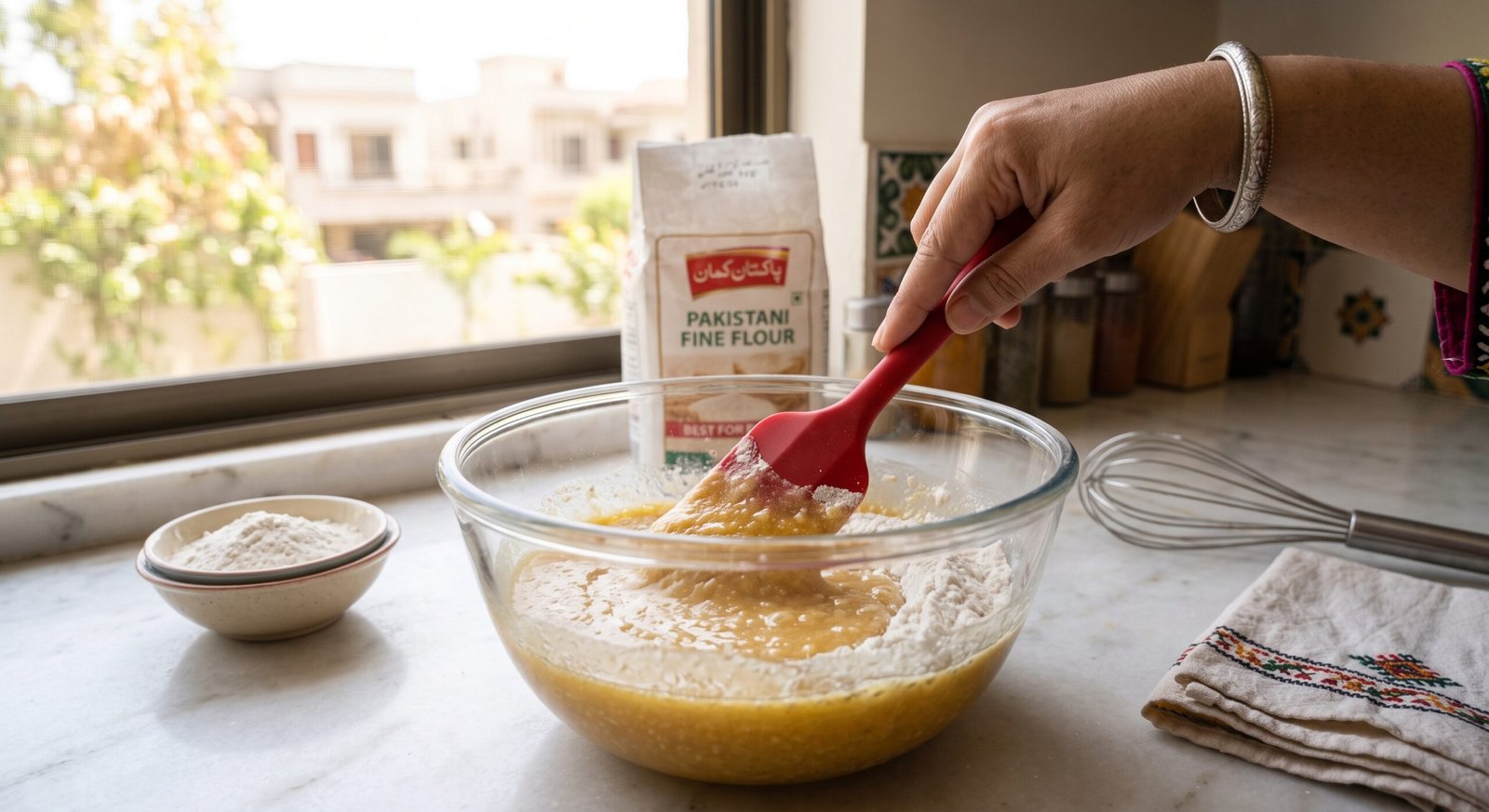
Creaming butter and sugar together incorporates air, but over-mixing once dry ingredients are introduced leads to structural flaws.
- The Problem: Over-mixing gluten-heavy batters trap extra air while simultaneously over-developing gluten. This combination leads to a quick, dramatic rise in the oven followed by a severe collapse in the center once cooled.
- The Fix: Mix dry and wet ingredients just until combined. Use a silicone spatula to fold the final flour additions gently by hand..
Conclusion
Understanding why cakes sink in the middle comes down to mastering precision in your kitchen. By accurately measuring your leavening agents, maintaining consistent oven heat with an external thermometer, resisting the urge to open the oven door early, and avoiding over-mixed batters, you can consistently achieve perfectly flat, fully baked cakes with ideal crumb structures.
Frequently Asked Questions
Can you fix a cake that has already sunk in the middle?
You cannot un-sink a baked cake, but you can easily salvage it. Trim the raised outer edges flat with a serrated cake leveler, or fill the sunken center crater with fresh fruit, whipped cream, or extra frosting before layering.
Why did my cake sink in the middle after cooling down?
If a cake looks perfect in the oven but sinks as it cools, it was likely slightly underbaked in the very center. The steam inside cooled and condensed back into liquid water, weighing down the unset crumb structure. Always test the middle with a toothpick before pulling it from the oven.
How does high altitude cause cakes to collapse in the center?
At high altitudes, lower air pressure allows leavening gases to expand faster, while moisture evaporates more quickly. This rapid expansion stretches air cells beyond their limit, causing them to pop and collapse the center. Reduce leavening agents and slightly increase baking temperatures at higher elevations.

One Comment