
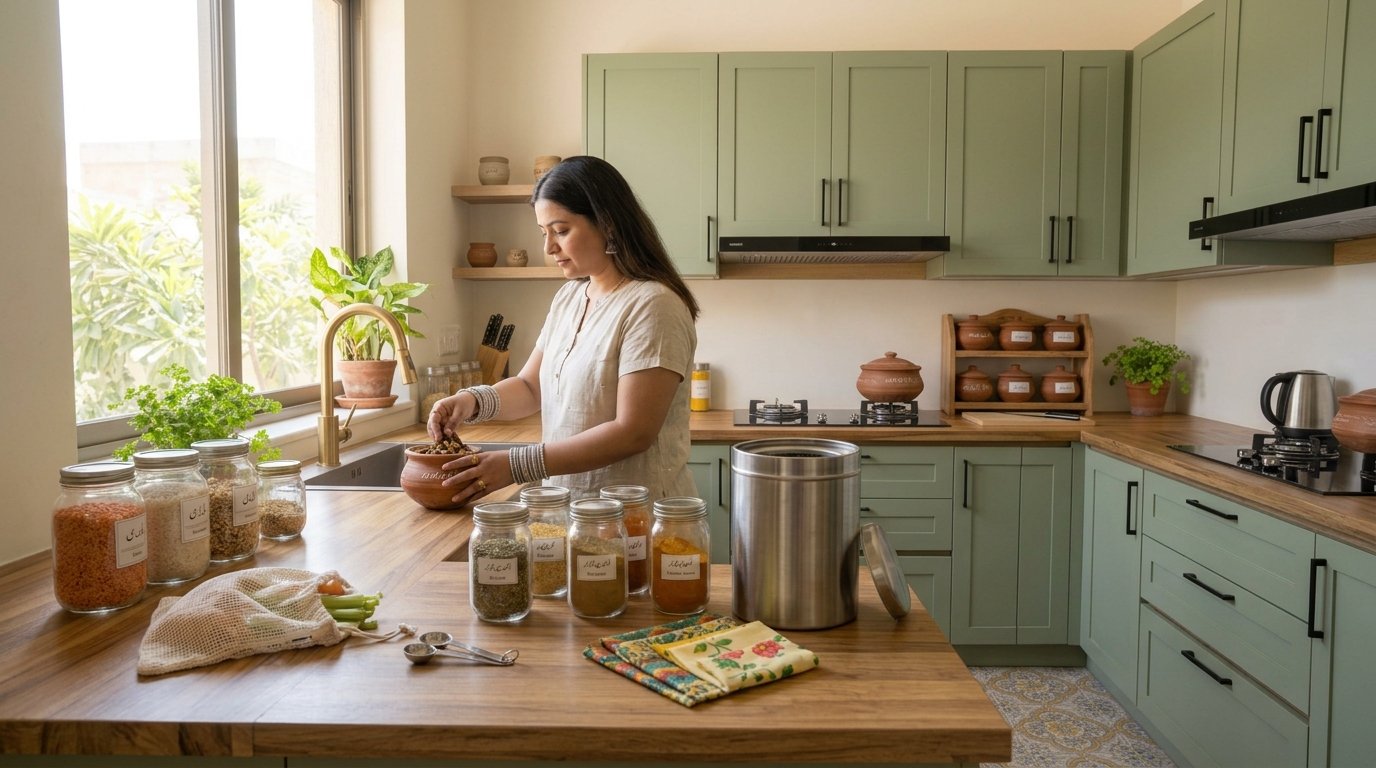
Zero-Waste: Zero Waste Kitchen Tips for Beginners to Reduce Daily Scrap
Transitioning toward a sustainable lifestyle often begins in the heart of the home: the kitchen. Adopting simple zero waste kitchen tips for beginners allows you to cut down on single-use plastics, reduce household food waste, and save money on groceries—all without feeling overwhelmed.
Rather than striving for instant perfection, sustainable living is about making small, consistent changes that accumulate into long-term impact over time.
Key Takeaways
- Audit Before Buying: Track what food you throw away most frequently to adjust grocery purchasing habits before making big lifestyle shifts.
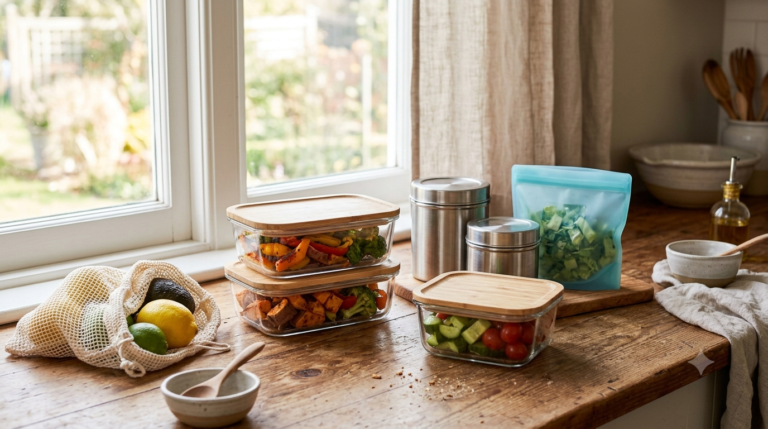
- Ditch Disposable Plastics: Swap plastic plastic wrap and single-use sandwich bags for beeswax wraps, silicone pouches, and glass containers.
- Organize for Freshness: Implement a “First In, First Out” (FIFO) pantry and fridge layout to consume perishable items before they spoil.
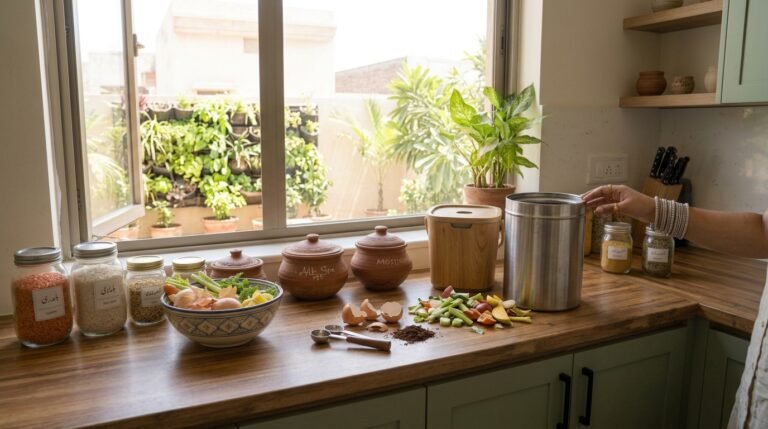
- Compost Food Scraps: Divert organic waste like fruit peels, coffee grounds, and vegetable ends away from landfills using countertop composting bins or freezer storage.
Simple Swaps to Eliminate Single-Use Plastics
One of the easiest entry points when practicing zero waste kitchen tips for beginners is swapping out disposable paper and plastic items for reusable alternatives.
Reusable Storage Solutions
Replace traditional plastic cling film with breathable beeswax wraps or flexible silicone stretch lids. For pantry staples like flour, rice, and lentils, store them in clear glass jars to easily track inventory levels while keeping food fresh and pest-free.
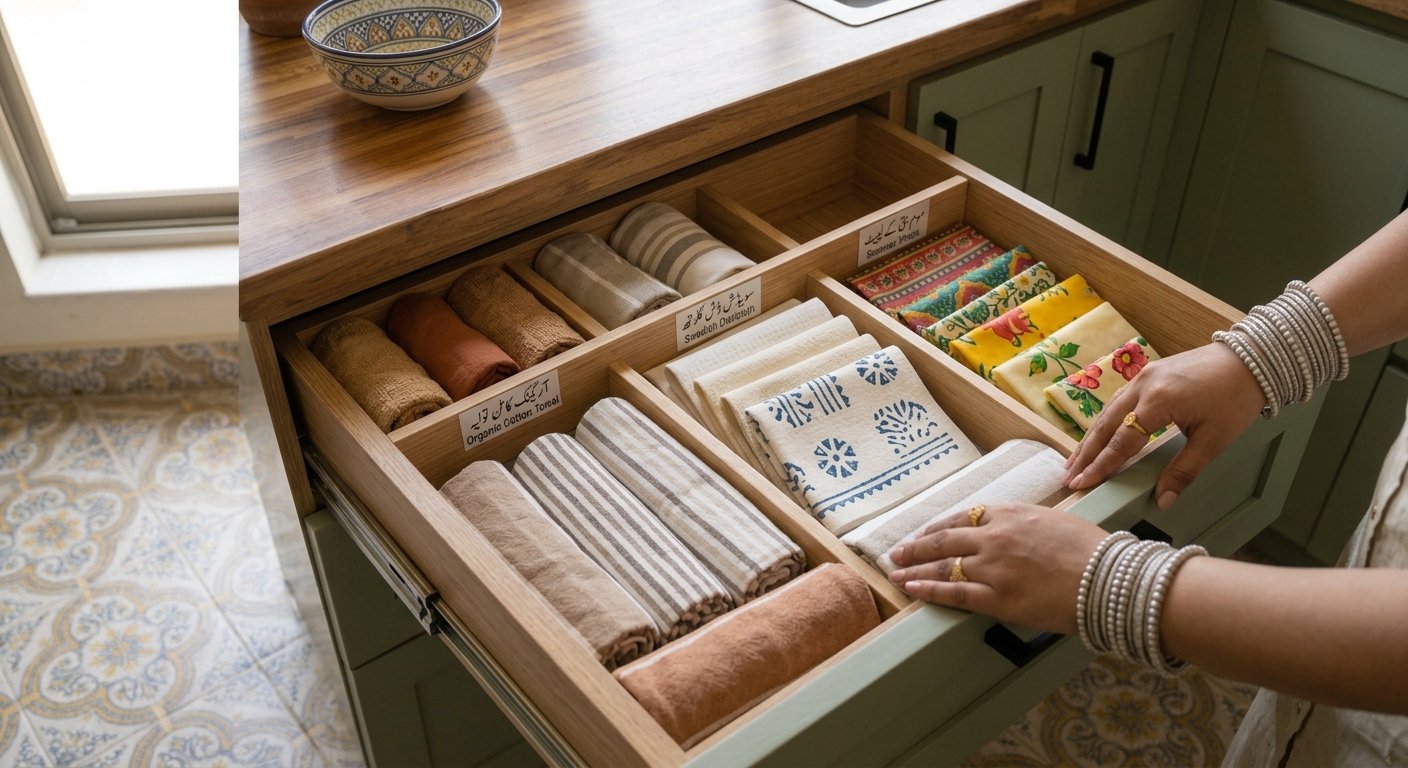
Cloth Towels Over Paper Towels
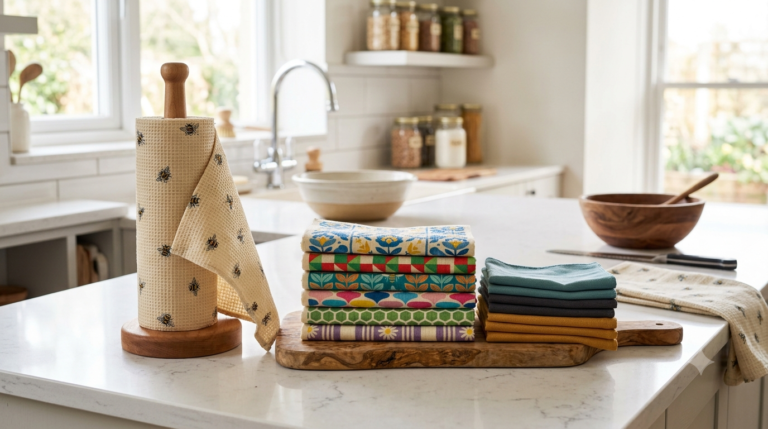
Paper towels contribute significantly to household landfill volume. Keep a basket of cotton dish towels, microfiber cloths, or washable Swedish dishcloths near your sink for everyday spills and counter wiping.
Smart Food Preservation and Storage Strategies
Preventing food waste is one of the most effective ways to lower your carbon footprint and stretching your grocery budget.
Master Proper Refrigerator Organization
Store herbs upright in a glass with an inch of water, keep leafy greens wrapped in a damp cloth inside crisper drawers, and create an “Eat First” station on a top fridge shelf for ingredients nearing expiration.
Creative Scrap Cooking
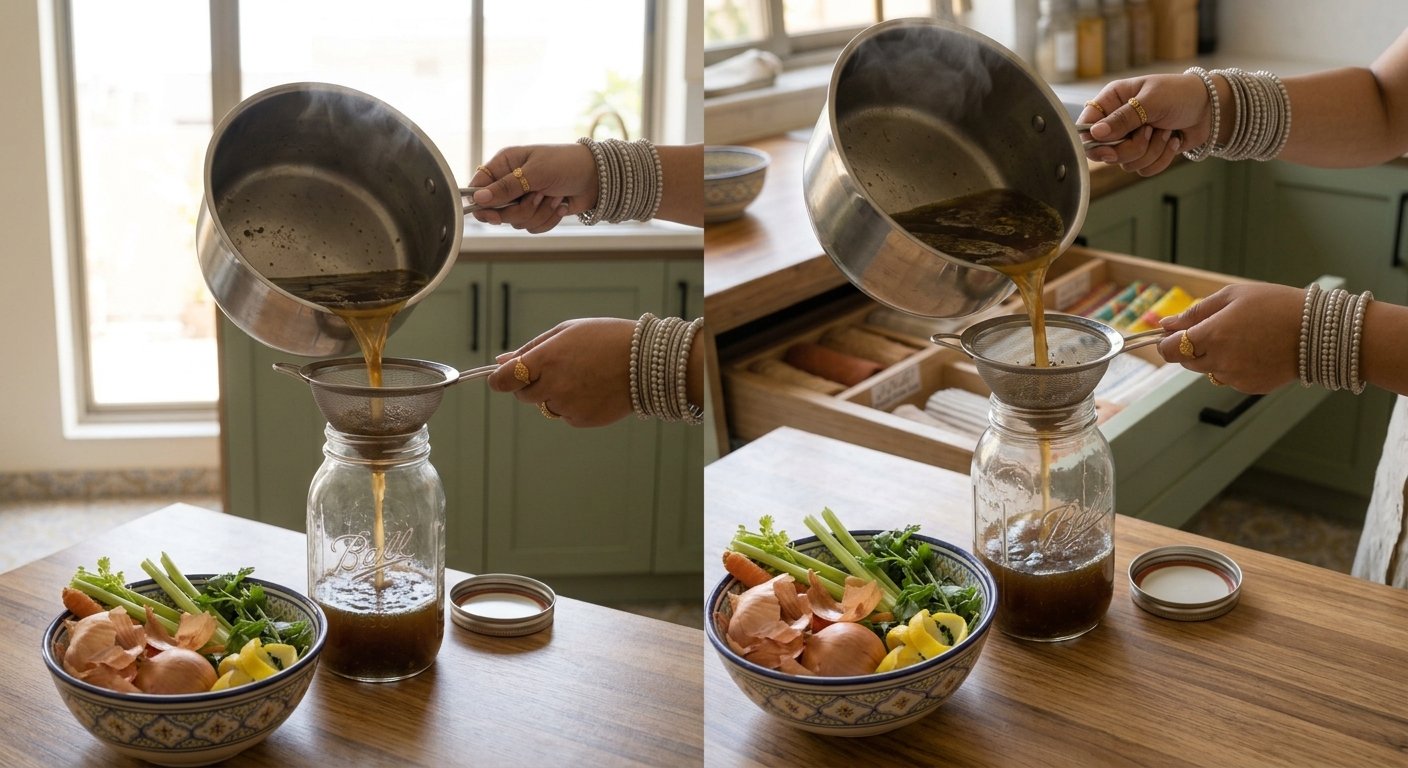
Vegetable trimmings—such as onion ends, carrot peels, and celery tops—can be stored in a freezer bag and simmered into homemade vegetable broth. Leftover fruit scraps or citrus peels make excellent infusions for flavored water or homemade vinegar cleaners.
Getting Started with Home Composting
Composting is essential for converting food scraps into nutrient-rich soil enrichment rather than letting them decompose anaerobically in landfills.
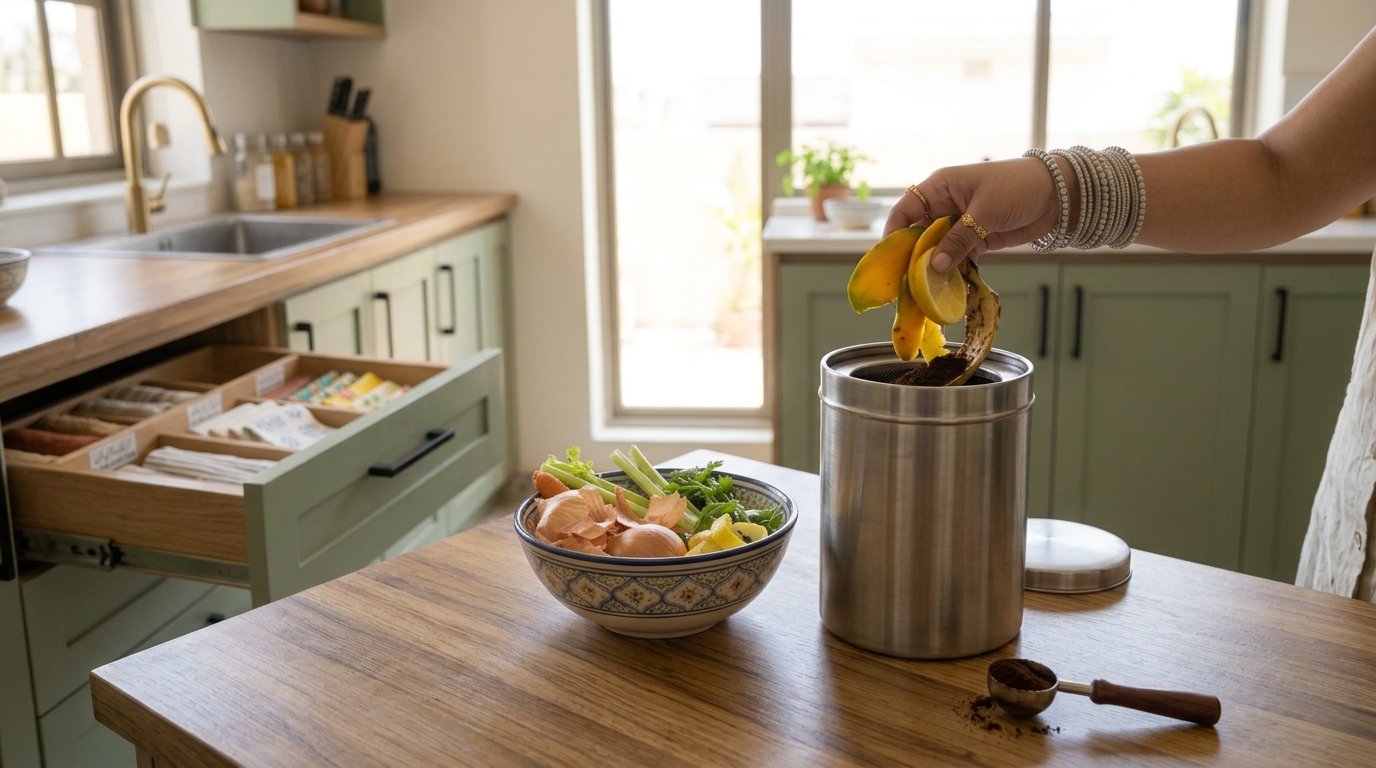
- Collect Daily Scraps: Place a compact, odorless stainless steel compost bin with a charcoal filter on your kitchen counter or keep scraps in a container inside the freezer.
- Choose a Compost Method: Depending on your living situation, utilize an outdoor tumbler bin, a vermicomposting (worm) bin, or local municipal green waste collection programs.
Conclusion
Starting your journey with zero waste kitchen tips for beginners does not require throwing away all your plastic containers overnight. By swapping disposable items for reusable alternatives, storing fresh produce properly, and starting a basic composting system, you can build an eco-friendly kitchen space that benefits both your household and the planet.
Frequently Asked Questions
What is the easiest way to start a zero-waste kitchen on a budget?
Start by using what you already own. Repurpose old glass sauce jars for food storage, cut up worn cotton t-shirts or towels into cleaning rags, and audit your fridge before shopping to avoid buying excess groceries.
Is zero-waste cooking expensive for beginners?
No. In fact, zero-waste practices save money over time by reducing food waste, eliminating repeated purchases of paper towels and plastic bags, and encouraging bulk buying.
What foods cannot be composted in a standard home compost bin?
Meat, dairy, oils, bones, and cooked oily foods should generally be avoided in basic backyard compost bins because they can attract pests and create bad odors, though specialized systems like Bokashi can handle them.
One Comment