
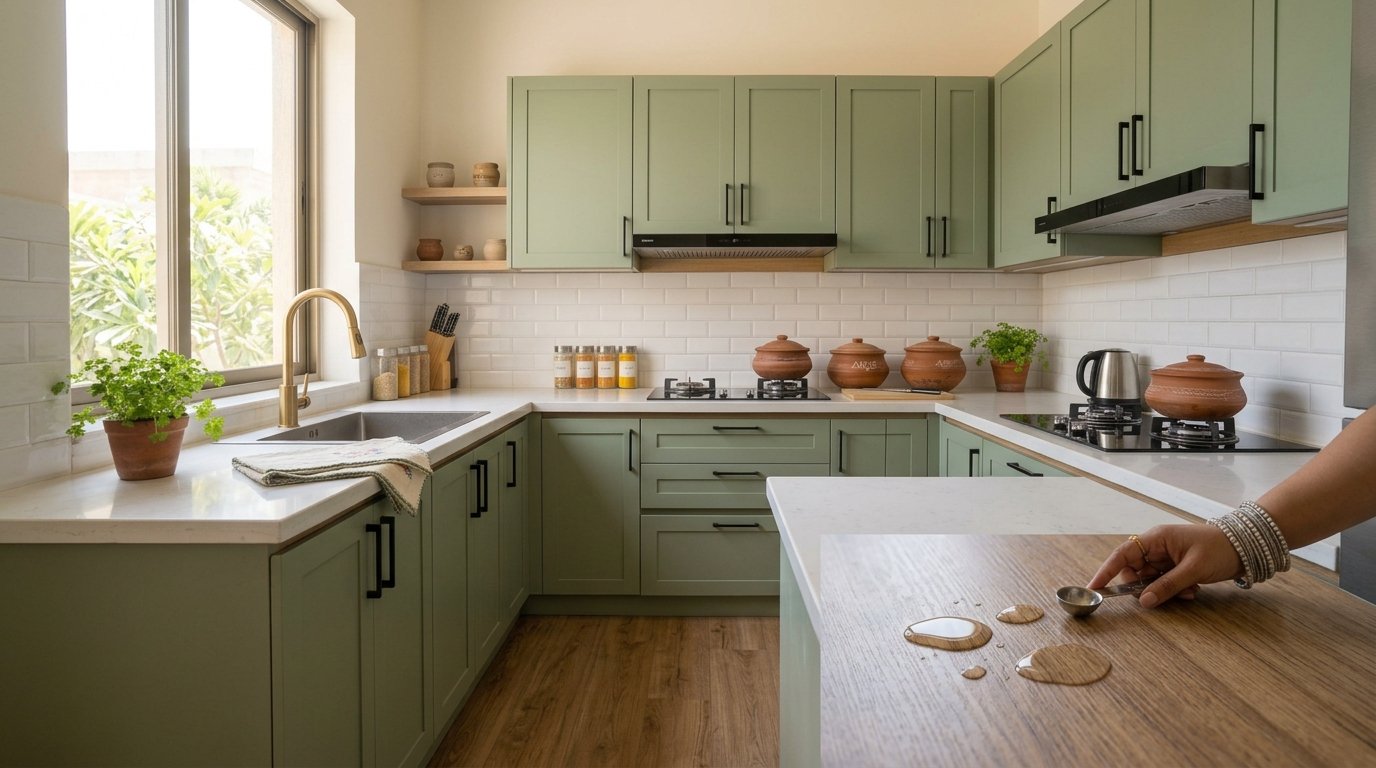
Spills, dropped cookware, and heavy foot traffic make the kitchen one of the most demanding environments for home flooring. Selecting the best water resistant kitchen flooring ensures your surfaces withstand liquid splatters, humidity, and routine cleaning without warping, swelling, or staining.
Modern flooring technologies provide options that offer both complete moisture protection and stylish designs, ranging from authentic hardwood textures to stone finishes.
Key Takeaways
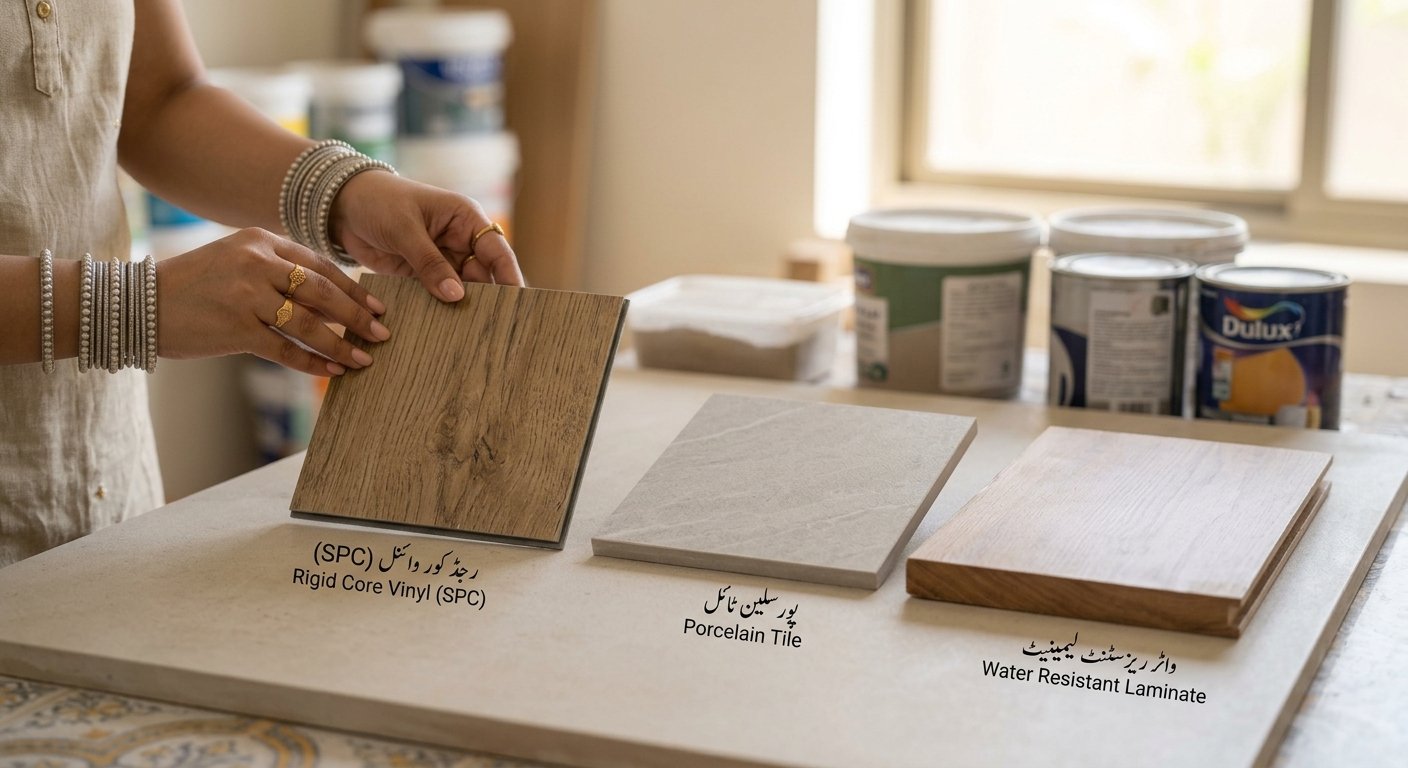
- Luxury Vinyl Plank (LVP): Offers 100% waterproof protection with rigid core options (SPC), making it the overall top choice for moisture-heavy kitchen environments.
- Porcelain and Ceramic Tile: Provides unmatched water resistance and scratch durability, though hard underfoot and requiring sealed grout lines.
- Water-Resistant Laminate: Features dense cores and hydrophobic surface coatings that resist standing spills for up to 24 to 72 hours.
- Proper Underlayment & Sealing: Ensures moisture barrier protection from subfloor dampness while dampening acoustic echoes in open-concept kitchens.
Top Flooring Options for Water Resistance
Finding the best water resistant kitchen flooring depends on balancing moisture defense, foot comfort, installation complexity, and overall budget.
1. Luxury Vinyl Plank (LVP) and Tile (LVT)
Luxury vinyl plank with a Stone Plastic Composite (SPC) core stands out as the industry standard for kitchen water defense. Because SPC cores contain limestone and polymer materials, LVP will not swell, buckle, or absorb water even during minor plumbing leaks.
2. Porcelain and Ceramic Tile
Tile remains a classic choice for wet zones. Porcelain tile features an exceptionally low absorption rate (less than 0.5%), making it virtually impervious to water penetration. Paired with modern stain-resistant epoxy grout, tile provides decades of moisture protection.
3. Water-Resistant Laminate Flooring
Modern laminate planks utilize dense fiberboard cores coated with hydrophobic edge seals. While traditional laminate was vulnerable to standing water, modern water-resistant grades can safely hold moisture spills on the surface for up to 72 hours without edge swelling.
Comparing Kitchen Flooring Materials
Selecting the right material requires evaluating how each option handles liquid exposure alongside comfort and maintenance demands.
| Flooring Material | Water Protection Level | Underfoot Comfort | Maintenance Needed |
| Luxury Vinyl Plank (SPC) | 100% Waterproof | Medium (Yielding) | Low (Sweep & Damp Mop) |
| Porcelain Tile | 100% Waterproof | Hard | Medium (Grout Sealing) |
| Water-Resistant Laminate | High (24–72 Hour Protection) | Medium-Hard | Low (Dry/Damp Mop) |
| Engineered Hardwood | Moderate (Surface Seal Only) | Warm & Comfortable | High (Immediate Spill Clean) |
Key Factors to Consider Before Installation
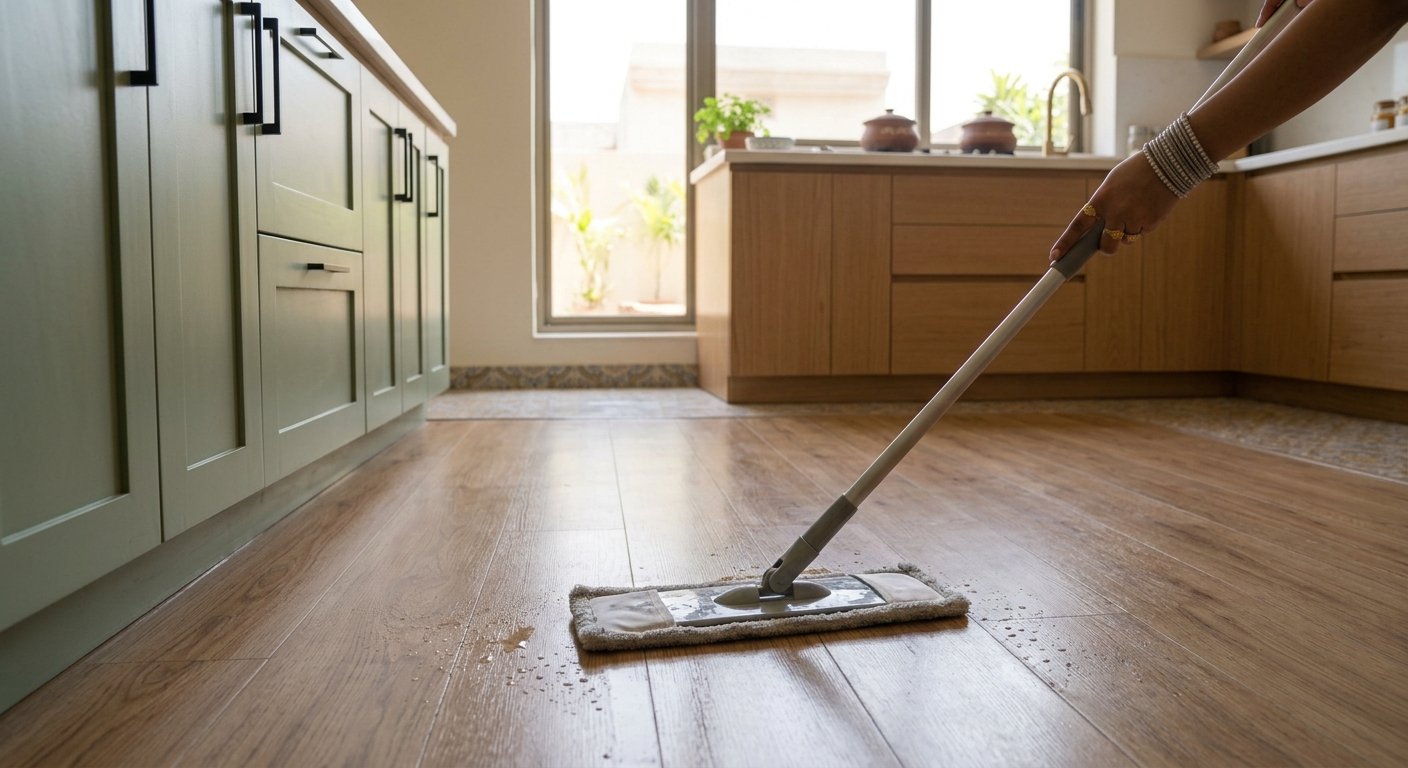
Installing the best water resistant kitchen flooring requires attention to underlying structures to ensure long-term performance.
Subfloor Moisture Barriers
Even 100% waterproof surface planks can trap moisture rising from concrete subfloors. Always install an approved 6-mil polyethylene vapor barrier beneath floating floors to prevent subfloor mold growth.
Perimeter Sealing and Expansion Gaps
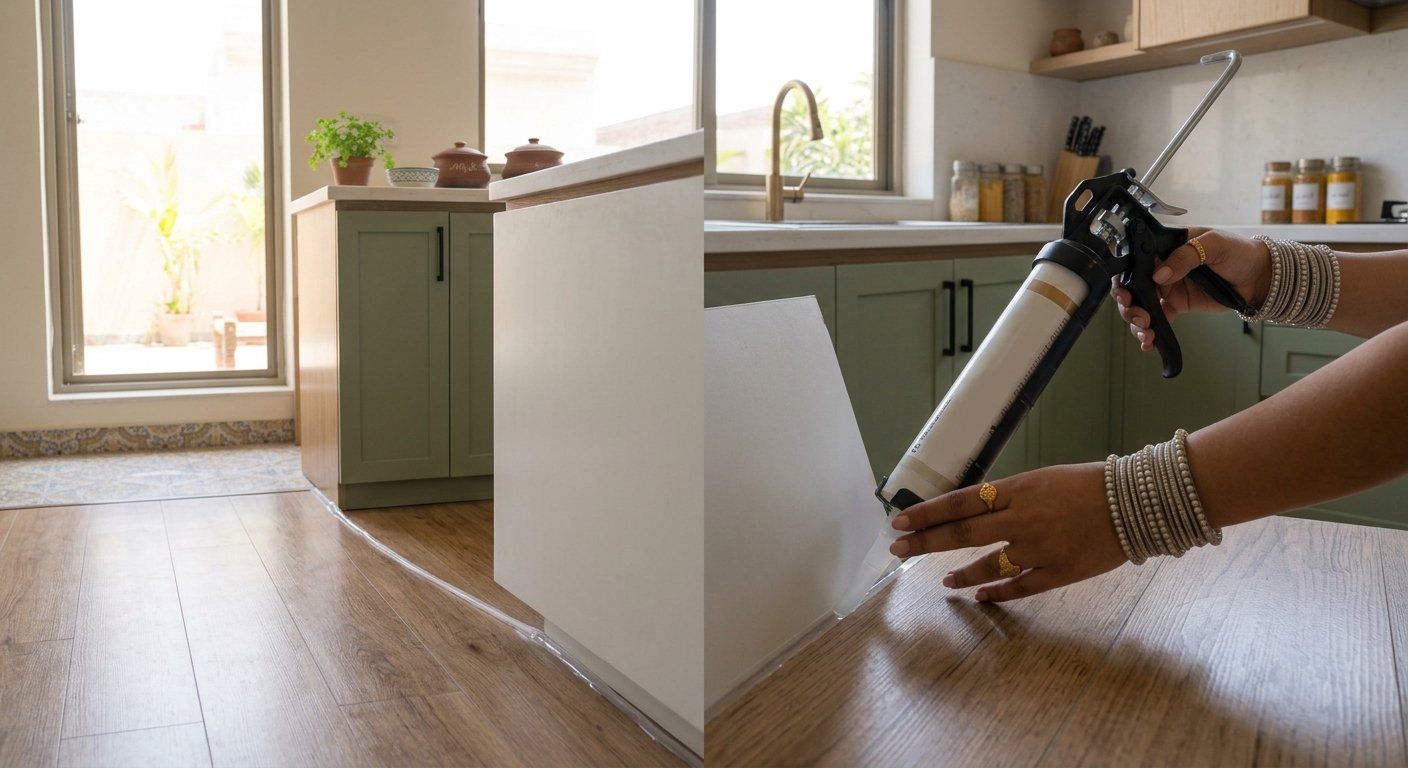
Floating floor systems require expansion gaps near walls and cabinets. Applying a bead of 100% silicone caulk around room perimeters, under cabinets, and near dishwasher openings stops water from seeping underneath floor edges during major spills.
Conclusion
Determining the best water resistant kitchen flooring comes down to your home’s unique demands. Rigid core luxury vinyl plank provides the ideal balance of complete waterproof security, comfortable underfoot feel, and realistic wood textures. Alternatively, porcelain tile offers extreme durability for heavy-use kitchens, while modern water-resistant laminate delivers cozy aesthetics at a budget-friendly price point.
Frequently Asked Questions
What is the difference between waterproof and water-resistant kitchen flooring?
Waterproof flooring (like SPC luxury vinyl or porcelain tile) uses non-porous materials that can sit submerged in water without absorbing liquid or warping. Water-resistant flooring (like treated laminate) tolerates surface spills for a limited time (usually 24 to 72 hours) before moisture begins penetrating the core.
Can water leak through the seams of floating vinyl plank floors?
While individual vinyl planks are 100% waterproof, liquid left standing in large quantities can eventually filter through unsealed tongue-and-groove seams down to the subfloor. Promptly wiping up large spills prevents subfloor exposure.
Is luxury vinyl plank better for kitchens than real hardwood?
Yes. Natural hardwood easily swells, stains, or warps when exposed to kitchen water spills, ice maker leaks, or pet dishes. Luxury vinyl plank accurately mimics hardwood visual textures while providing complete moisture protection.
2 thoughts on “Flooring: Best Water Resistant Kitchen Flooring for Long-Lasting Durability”