
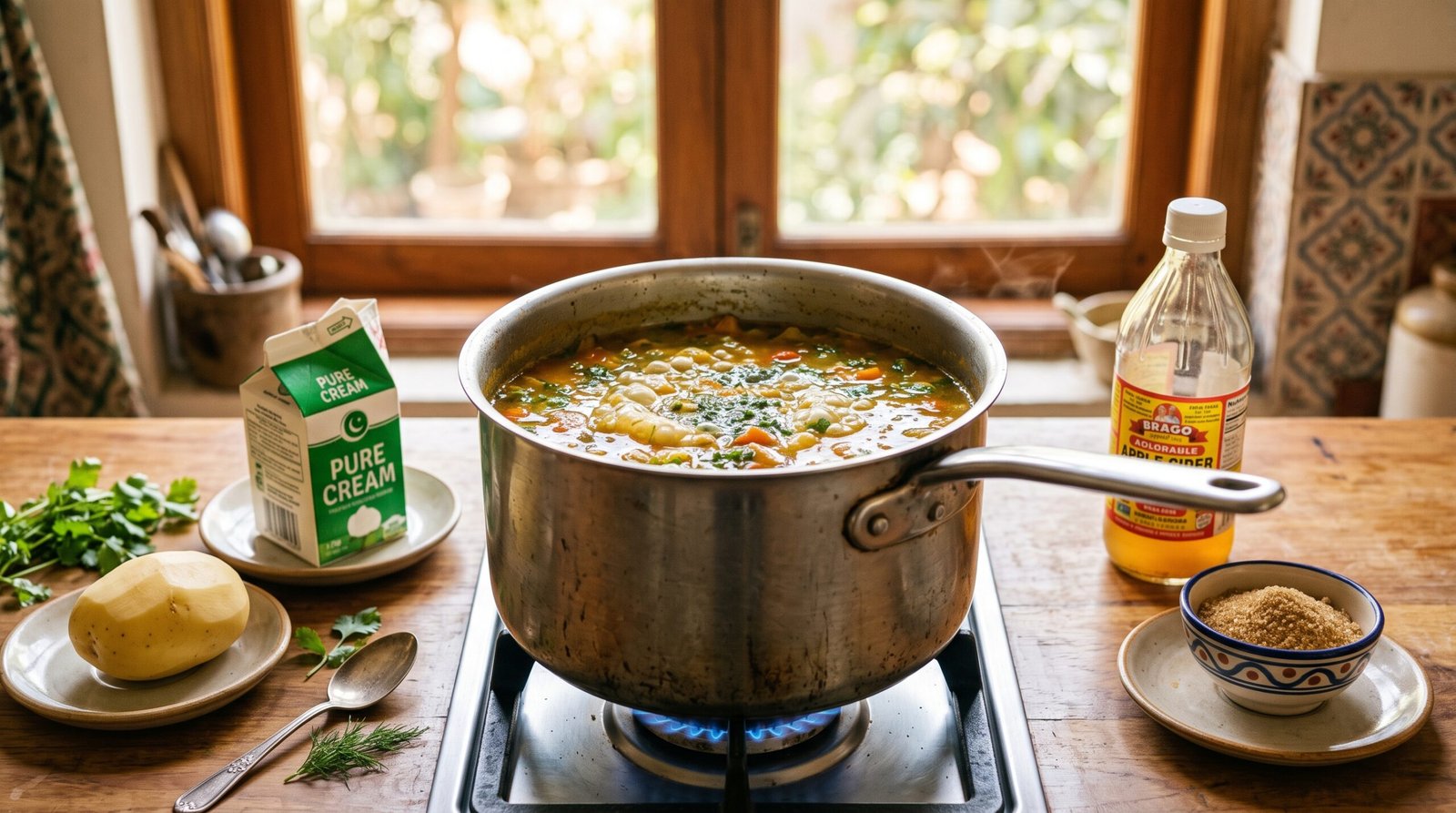
It is a moment every home cook dreads. You’ve been simmering a beautiful pot of soup for hours, you give it one last taste, and your heart sinks. It’s a salt bomb. Before you even consider pouring your hard work down the drain, breathe. Mastering the ability to fix over-salted soup or sauce is an essential pantry science skill that separates beginners from experts.
When excess salinity ruins a dish, it is often due to the flavor profile becoming completely unbalanced. There is no magic “de-salting” agent, but through strategic dilution, acidic counteraction, and starch absorption, you can bring your meal back from the brink of disaster and restore a harmonious, delicious flavor profile.
Key Takeaways
- Dilution is King: The fastest way to fix over-salted soup is to add un-salted volume (water, stock, or more ingredients).
- Acid Balances Brine: Acidity from lemon juice or vinegar doesn’t remove salt but tricks the tongue into perceiving the dish as balanced.
- Potato Power: A raw, peeled potato can absorb some sodium but works best in broths, not thick sauces.
- Sweetness & Cream: Adding sugar or dairy effectively masks the intensity of the salt by introducing competing flavor notes.
Why Is My Soup Over-Salted? (The Culprits)
An over-salted dish rarely happens because someone grabbed the salt shaker too casually. It usually comes from a lack of foresight regarding ingredient concentration.
1. Reduction Without Taste Control
The most common mistake is seasoning a liquid at the beginning of a long simmer. As water evaporates and the liquid reduces, the salt concentration skyrockets. Always adjust salt levels at the end.
2. Sodium-Heavy “Hidden” Ingredients
Many pantry staples, such as canned beans, broths, and tomato pastes, contain significant hidden sodium. If you use standard broth and salted tomatoes, you may surpass acceptable salinity before ever touching your salt cellar.
The Scientific Approach: 5 Methods to Fix Over-Salted Soup Fast
Here are the most effective, science-backed methods to rescue your salty dish, prioritized by ease and effectiveness.
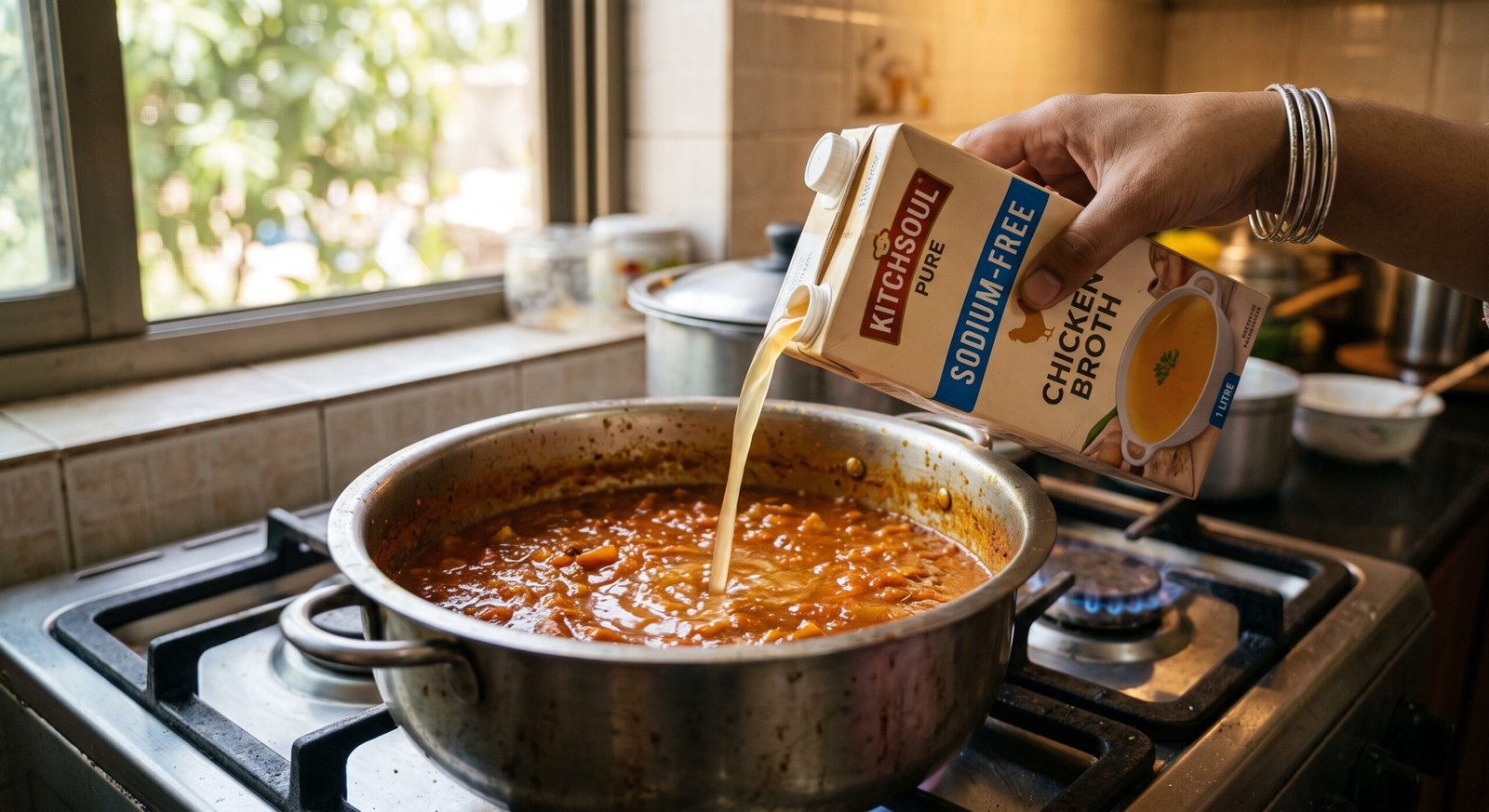
Method 1: Strategic Dilution (The Gold Standard)
If you have space in your pot, this is the safest method. You must add volume without adding more salt.
- How-To: Add sodium-free chicken, beef, or vegetable stock. If you have none, use plain water. For creamier soups, add un-salted milk, half-and-half, or heavy cream.
- Pantry Science Note: You are physically spreading the sodium molecules across more liquid molecules, lowering the total concentration per spoonful.
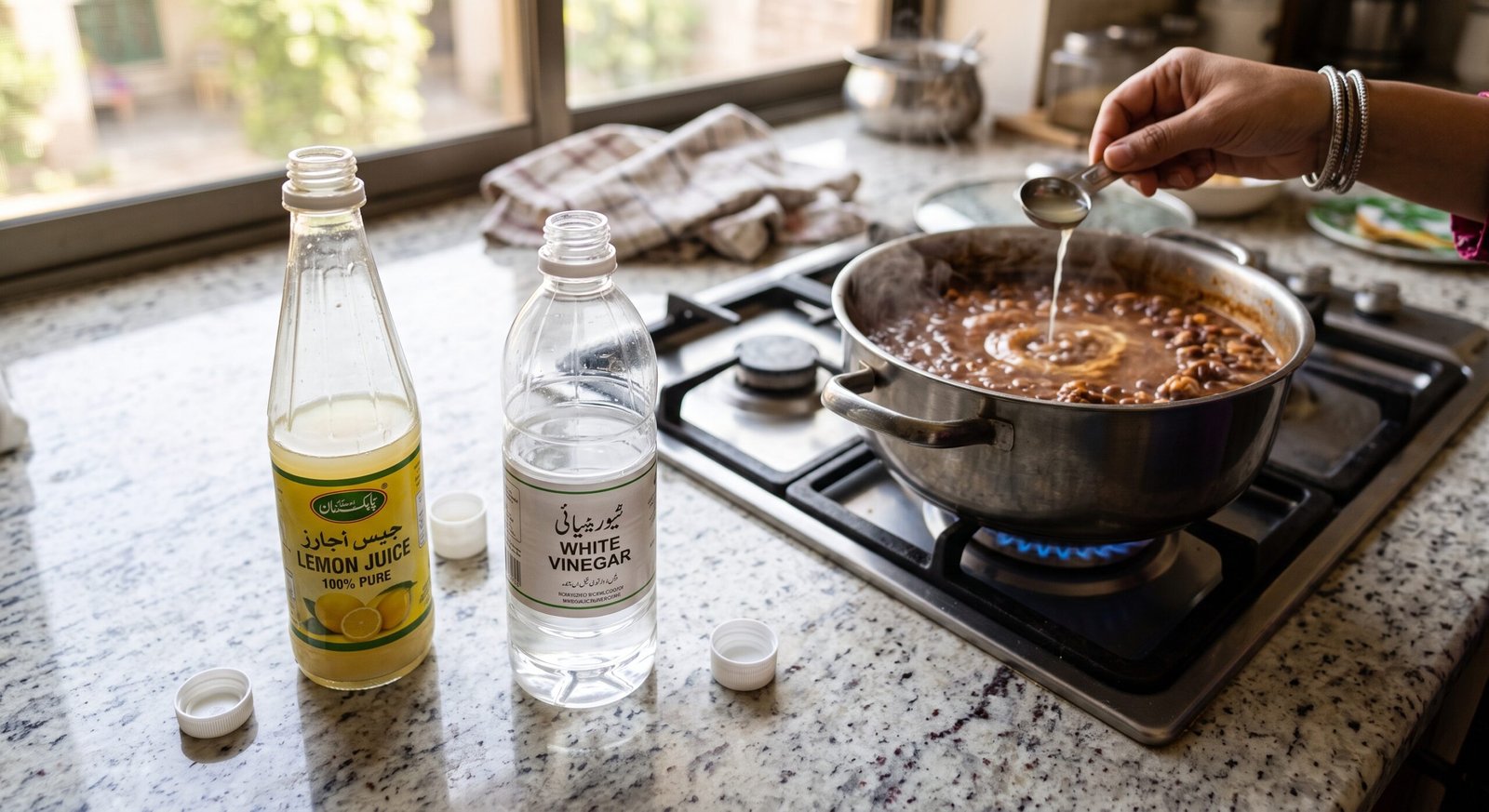
Method 2: Acidic Counteraction (Tongue Triage)
Acidity doesn’t eliminate salt, but it creates a complex flavor structure that minimizes the perception of saltiness.
- How-To: Squeeze in fresh lemon or lime juice, or add a small splash of apple cider vinegar or white wine vinegar. Start with 1/2 teaspoon at a time.
- Pantry Science Note: Acid stimulates saliva and introduces sour notes that compete directly with the salinity on your taste buds.
Method 3: Starch Absorption (The Potato Trick)
While debated by some culinary purists, the potato method does work by offering sodium molecules a porous surface to absorb into. It is highly effective for clear broths.
- How-To: Peel a large raw potato, cut it into thick chunks, and drop it into the over-salted soup. Simmer for 15–20 minutes, then discard the potato chunks before serving.
- Pantry Science Note: Starch acts like a sponge, drawing in sodium-heavy liquid. This method does not fix highly concentrated or thick sauces effectively.
Method 4: Introduce Sweetness (Flavor Masking)
Sugar acts in a similar way to acid by providing a competing flavor profile, effectively masking the extreme briny taste.
- How-To: Add a teaspoon of sugar, honey, or maple syrup. For darker, richer soups like chili, brown sugar works well.
- Pantry Science Note: Sweetness and saltiness are opposite flavor percepts. A hint of sweetness dulls the perceived sharpness of the salt.

What NOT to Do When Fixing Salt
When desperately searching for a fix, avoid these common mistakes:
Do Not Add Potato Starch or Flour Directly
While potatoes help, adding pure starch or flour only serves to thicken the liquid, which sometimes concentrates the remaining salt even further.
Do Not Season Until the Absolute End
Never adjust salinity during reduction. Always reduce first, then taste, then season
Conclusion
Restoring a balanced flavor to a meal that has become over-salted is an advanced cooking skill that focuses on patience and understanding basic pantry science. Whether you choose to dilute your dish, introduce a competitive flavor through acid or sweetness, or rely on the absorptive properties of a potato, remember that you can rescue your soup. Take a deep breath, choose your method, and taste as you go.
Frequently Asked Questions
Can I fix over-salted soup without adding water?
Yes, but you will need to rely on flavor perception tricks. Adding acid (lemon juice, vinegar), fat (cream, butter, coconut milk), or sweetness (sugar, honey) will effectively mask the saltiness without physically lowering the sodium concentration by diluting it with water.
What is the fastest way to fix over-salted soup?
The absolutely fastest method is dilution. If you have additional un-salted broth or water, adding it immediately lowers the salt concentration. This is the fastest, most effective option if you have space in your pot.
How much vinegar do I use to fix over-salted soup?
Start very small. Add only 1/2 teaspoon to 1 teaspoon of acid (lemon juice or vinegar) at a time, then stir and taste. You want to add complexity, not turn your soup sour.
1 thought on “Pantry Science: How to Fix Over-Salted Soup or Sauce Fast”